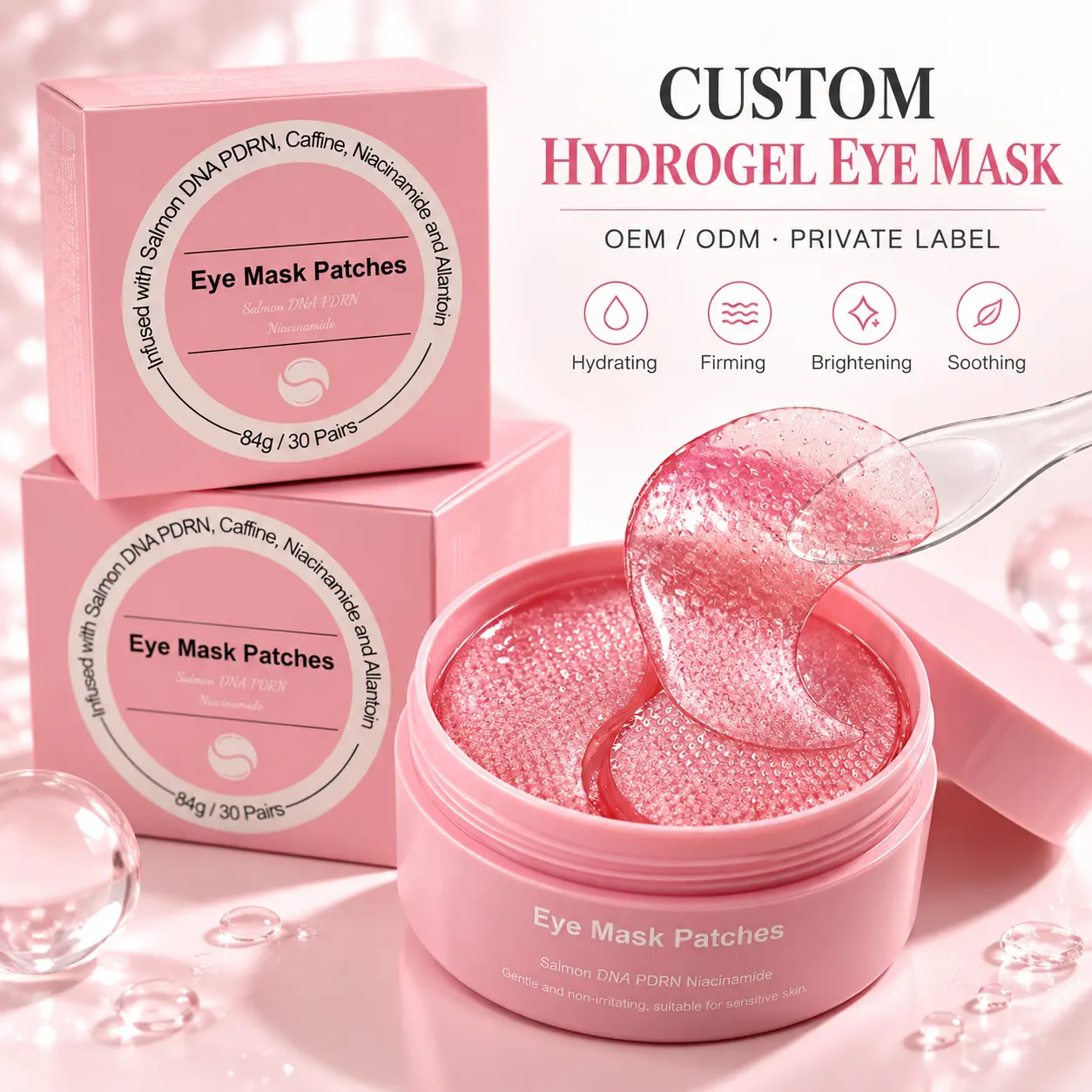
Under-eye patch serum is a short-contact delivery problem with a long-contact marketing problem. The patch sits on the skin for 15 to 30 minutes, which is enough for hydration and a temporary reduction in puffiness, and not enough for a structural change. Brands that align the serum with what a patch can actually deliver get repeat purchase; brands that load a serum with a hero molecule and print a structural claim get a one-star review about results.
1. Caffeine: the de-puffing workhorse
Caffeine at 1 to 3 percent is the most defensible under-eye active, because its vasoconstrictive effect is measurable within 20 minutes. It is water-soluble, stable, cheap, and it does not destabilise a carrageenan gel below roughly 3 percent. The claim should be about the appearance of reduced puffiness, not about removal of bags. Above 3 percent the sensory benefit does not increase much, and the risk of a stinging sensation on thin periorbital skin rises.
2. PDRN: the current story
PDRN – a DNA fragment fraction – has become the most requested under-eye ingredient in the last two years, carried over from the aesthetic clinic market. In a cosmetic patch it is used at 0.1 to 1 percent as a humectant and skin-conditioning agent, and the honest claim is about the appearance of smoother, more supple skin. Claims that imply tissue regeneration belong to a different regulatory category entirely. Ask a supplier for the molecular weight and the source documentation, because the ingredient name is used loosely across the industry.
3. Peptides: slower, and better suited to a nightly product
Signal peptides and copper peptides have a plausible mechanism but a timescale of weeks, not minutes. They are worth including in a patch for the cumulative story across a 30-pair jar, at 0.05 to 0.2 percent, provided the formula’s pH and preservative system do not degrade them. A patch sold as a one-off treatment should not lead with a peptide claim, because the customer will judge the result on the day.
4. Humectants and the hydration claim
The most reliable measured effect of any patch is hydration: corneometry readings rise measurably after 20 minutes and remain elevated for a few hours. A glycerin load of 8 to 12 percent plus a low-molecular hyaluronate gives a strong hydration result at low cost, and it is the claim least likely to disappoint. Many successful patches are, in formulation terms, a good humectant gel with a modest caffeine dose and a well-chosen serum viscosity.
5. Serum compatibility with the gel
| Ingredient type | Load range | Gel risk |
|---|---|---|
| Caffeine | 1 to 3 percent | Low below 3 percent |
| Niacinamide | 2 to 5 percent | Low, pH dependent |
| PDRN | 0.1 to 1 percent | Low |
| Peptides | 0.05 to 0.2 percent | Preservative compatibility |
| Salts and buffers | keep low | High, can break carrageenan |
6. Testing the claims you intend to print
Puffiness: standardised photography and, where possible, ultrasound or 3D imaging at 0, 20 and 60 minutes on 30 subjects. Hydration: corneometry at the same intervals. Dark circles: colorimetry, because photographs lie under different lighting. Smoothness: a blinded expert grader. A patch that claims three effects needs three measurements, and the budget for those tests should be in the launch plan from the beginning.
7. Commercial profile
Stock caffeine or niacinamide serum, 5 ml per pair, MOQ 2,000 pairs, 25 to 35 days. PDRN and peptide variants need an extra two to three weeks for sourcing documentation. See the eye patch catalogue, and the patch manufacturing guide for how serum load interacts with gel thickness.




