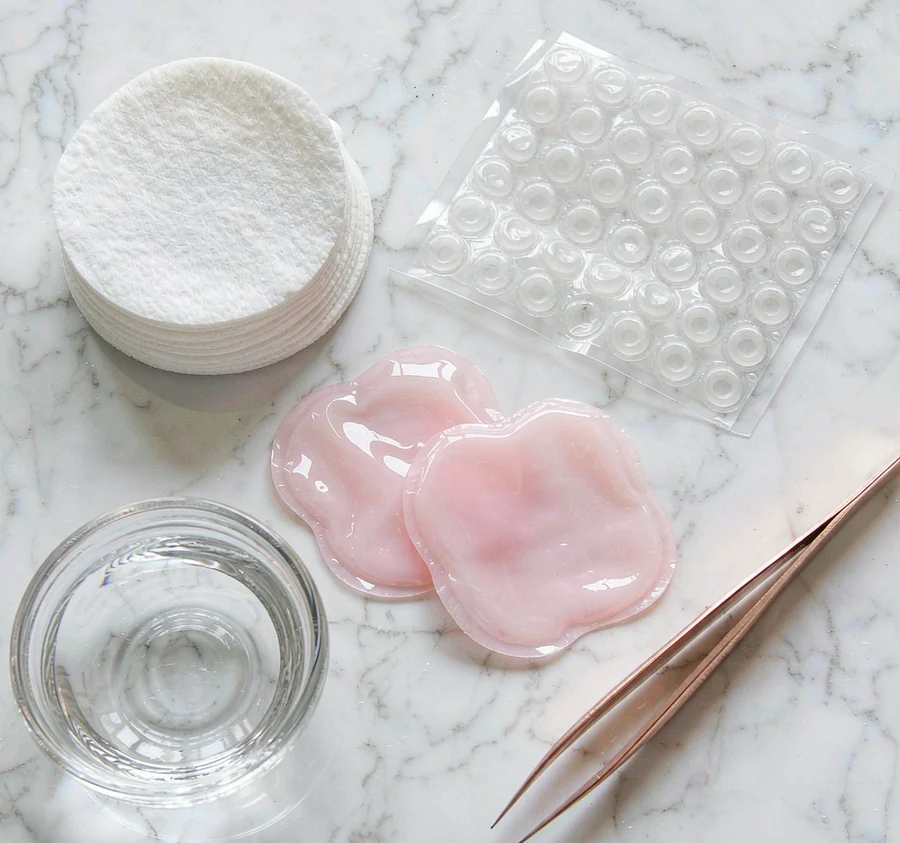
Reusable gel pads are the durable alternative to a disposable cotton pad: a soft silicone or hydrogel disc that applies toner, removes makeup or delivers a serum, then gets washed and used again. The pitch is environmental, the commercial logic is a higher price per unit with a repeat purchase cycle, and the engineering question is whether the pad survives 50 cycles without losing its surface.
1. Material options
Silicone at 10 to 30 Shore A is soft, durable and washable, and it does not absorb product, which makes it good for application and poor for removal. A hydrogel pad holds water and product and is closer to a disposable experience, but it degrades. A microfibre pad with a silicone backing removes makeup well and needs washing after every use. A silicone pad with a microfibre face is the combination that covers both jobs.
2. Surface and removal performance
The removal performance of a reusable pad depends on the fabric face, not on the silicone. A microfibre face at 200 to 300 grams per square metre removes makeup with water alone, and a shorter pile leaves residue. Test removal against a long-wear foundation and a waterproof mascara on ten subjects, scoring on a 0 to 4 scale, and compare with a cotton pad as a control.
3. The wash cycle
A reusable pad is judged on how it behaves at cycle 30. Run 50 hand washes in lukewarm water with a mild soap, air dry, and measure surface integrity, dimensional change and removal performance at cycles 1, 10, 30 and 50. A pad that still removes a long-wear foundation after 50 cycles can carry a 50-use claim. A pad that fails at 20 should be sold as a three-month product with a replacement pack.
4. Hygiene and the storage question
A wet pad left in a shower is a microbial risk, and a reusable product used around the eye area needs explicit care instructions: rinse after use, air dry, store dry, replace at the stated interval. A storage pouch or a small drying hook raises the price and reduces complaints. A brand that omits the washing instruction is selling a pad that will be described as unhygienic within a month of reviews.
5. Claims and the environmental story
The environmental claim has to be specific. A pad that replaces 500 cotton pads over two years is a defensible comparison if the numbers are stated and the wash water is not ignored. A vague sustainable claim on a silicone product made from petrochemical feedstock invites a challenge. The strongest framing is a specific number of disposables avoided, with the wash instruction included.
6. Pack and price
A single pad with a pouch is the trial; a three-pack with a drying pouch is the household SKU; a set with a wash bag is the gift. A reusable pad prices at three to five times a pack of cotton pads, which is defensible only when the reuse count is printed on the pack. A pad sold without a count reads as expensive.
7. Commercial profile
Silicone pad with a microfibre face, one or two per pack, MOQ 3,000 packs, 25 to 35 days. See the beauty tools range and the cotton pad guide for the format it replaces.