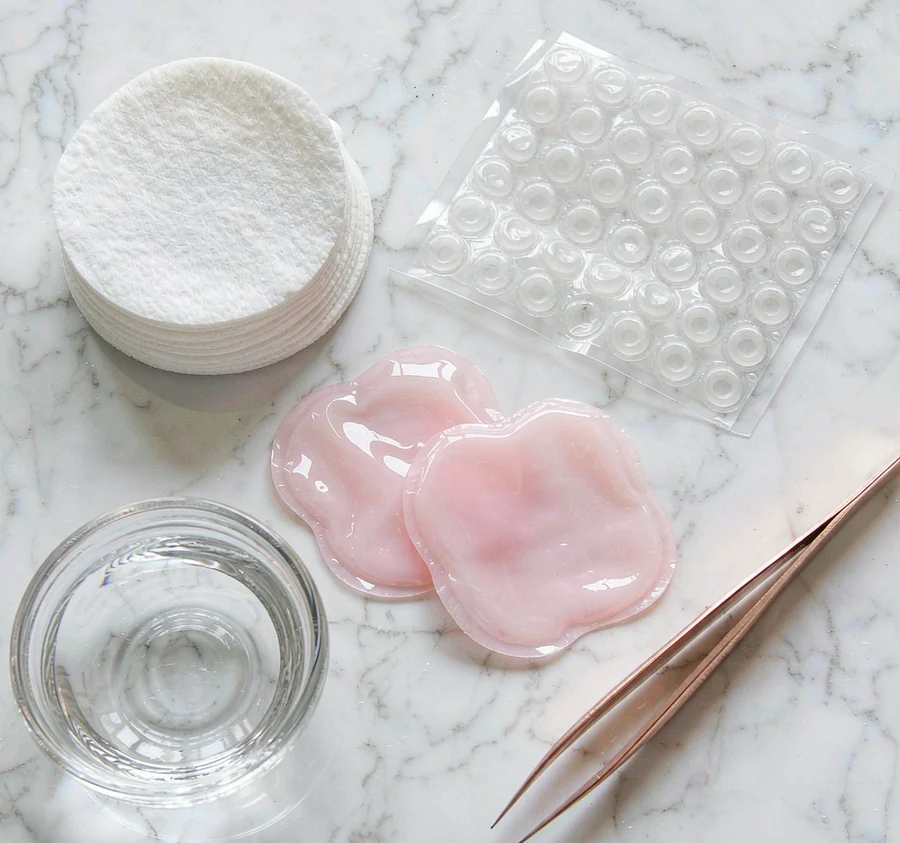
Cotton pads manufacturing is a commodity business with a quality gap customers notice at once: a pad that sheds fibres across the cheek, splits in half when wet, or scratches the eye area. The pad is cheap, the complaint is not, and the difference is decided by fibre length, ply and edge treatment rather than by the price per unit.
1. Fibre and lint
A long-staple cotton sheds less than a short-staple one, because short fibres pull out of the web during use. A blend with a small amount of a synthetic fibre reduces lint further and is common in the premium segment, though a pure cotton claim then fails. Lint is measured by rubbing a pad on a dark woollen cloth for 20 strokes and counting visible fibres – a simple test that predicts the customer’s experience better than a fibre specification.
2. Ply and structure
A single-ply pad is cheap and splits; a two-ply pad holds together and is the minimum for makeup removal; a three-ply or a spunlace pad is the premium option and stays intact under a heavy toner. A quilted or embossed pattern holds the plies together and adds a scrubbing texture. A pad with a sealed edge does not fray; an unsealed edge is where the shedding starts.
3. Shape and the two-sided design
Round pads suit toner and general use; oval pads suit eye makeup removal and follow the lid shape; square pads suit nail work and large-area cleansing. A two-sided pad – a smooth side for toner and a textured side for exfoliation – raises the perceived value at a small cost, and it is the format most private label brands choose. A textured side that is too abrasive produces redness on the cheek; the texture should be a light emboss rather than a pronounced grid.
4. Absorption and release
A pad should absorb what it needs and release it onto the skin, not hold it. A dense pad holds product and wastes it; a loose pad releases too fast and drips. Measure by dosing 1 ml of a standard toner onto a pad and squeezing after 10 seconds – a good pad releases 50 to 70 percent. A pad that releases 30 percent doubles the customer’s product consumption and generates a complaint about the toner rather than the pad.
5. Sterility and the eye area
A pad used on the eye area should not have loose fibres. A common specification is to cut the pad and shake it over a black surface; any visible fibre indicates a lint risk. A pad sold for eye makeup removal should carry a note about single use, because a damp pad left on a bathroom shelf is a microbial risk even when the pad itself is clean at manufacture.
6. Packaging
A stack in a polybag is the cheapest; a drawstring bag is the reusable format; a rigid canister is the bathroom-display format and the one that justifies a higher price. A pad bag that is open at the top lets the stack absorb bathroom humidity and swell, so a resealable closure is worth the cost. A 100-count pack is the retail standard; a 200-count is the value pack.
7. Commercial profile
Two-ply, 60 mm round pad, 100 per pack, MOQ 5,000 packs, 25 to 35 days. See the beauty tools range and the reusable pad guide for the alternative format.




