Makeup remover capsules solve a real travel problem: a liquid cleansing oil is the one product nobody wants to decant into a 100 ml security bag. Converting it into a 0.8 to 1.0 ml bead gives a single-use dose that travels in a jar, which is why amenity, hotel and travel-retail buyers have pushed this format forward faster than the retail brands have.
1. Two fill families, two behaviours
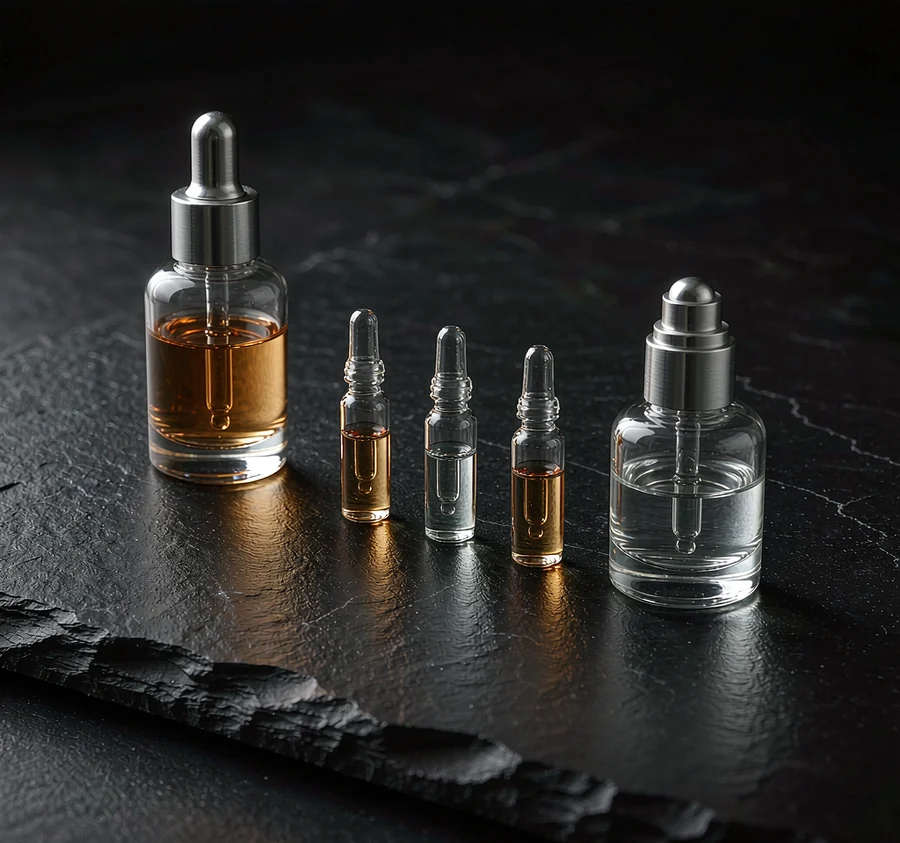
Cleansing oils fall into two groups. Hydrocarbon-based oils – mineral oil, isohexadecane, hydrogenated polydecene – dissolve makeup reliably and are the cheapest per litre. Ester-based oils – ethylhexyl palmitate, isopropyl myristate, caprylic/capric triglyceride – feel lighter, rinse more cleanly, and are the better choice for a product that will be used around the eyes. Both work in a capsule; the hydrocarbon group softens gelatin shells faster and needs a thicker wall.
2. The emulsifier that makes it rinse
A cleansing oil that does not emulsify leaves a film and a complaint. The standard is a polyglyceryl ester or a PEG-free sorbitan derivative at 8 to 15 percent, tuned so the oil disperses into a milky emulsion at 30 to 35 degrees Celsius and rinses without a residue. Higher emulsifier loads rinse cleaner and feel thinner; lower loads give a richer slip and a heavier after-feel. Sample both at 10 percent and 15 percent and let a panel decide – this ratio is a sensory decision, not a chemistry one.
3. Eye safety is the constraint that removes ingredients
Anything that goes near the lash line has to pass an ocular irritation screen, and the practical consequence is a short ingredient list. No fragrance, no essential oils, no high-foaming surfactants, no alcohol. If your marketing wants a scent, put it in the jar closure or a secondary wipe, not in the fill. For markets that require it, an HRIPT or a human ocular test on the final formula is the evidence a retailer will ask for.
4. Shell specification for an oil fill
At 0.8 to 1.0 ml, a 1.0 mm shell with a 24-hour dry is the workable profile. HPMC shells are the safer choice for hydrocarbon fills because they resist oil migration better than gelatin. A vegan claim is common in this category and it is worth having: hotel groups increasingly specify it.
5. Packaging that defines the product
- 30 or 60 beads in a clear PET jar, with a pump or a flip cap. A pump cap stops the customer tipping out five beads when they want one.
- Single-bead sachets for amenity trays, where the bead is packed in a foil pocket with a printed back.
- A travel tin of 15 beads, which is the format that sells best in airport retail.
- A carton with a QR code to a how-to video, because break-and-rub is not obvious to a first-time user.
6. Testing that matters
Makeup removal efficacy is measured, not asserted. A standard test uses a defined load of long-wear foundation and waterproof mascara on an artificial skin substrate, with a measured rub protocol and image analysis before and after. A consumer study of thirty users adds the perception data most retailers want. Skip both and your claim rests on an opinion.
7. Commercial profile
Stock emulsifying oil base, 1.0 ml fill, 30 beads per jar, MOQ from 500 pieces, 25 to 35 days. Fragrance-free base is stocked; a scented version needs an ocular screen and adds four weeks. See the makeup remover capsule listings for current fills, and the travel set packaging notes if you are building a multi-item kit around this bead.