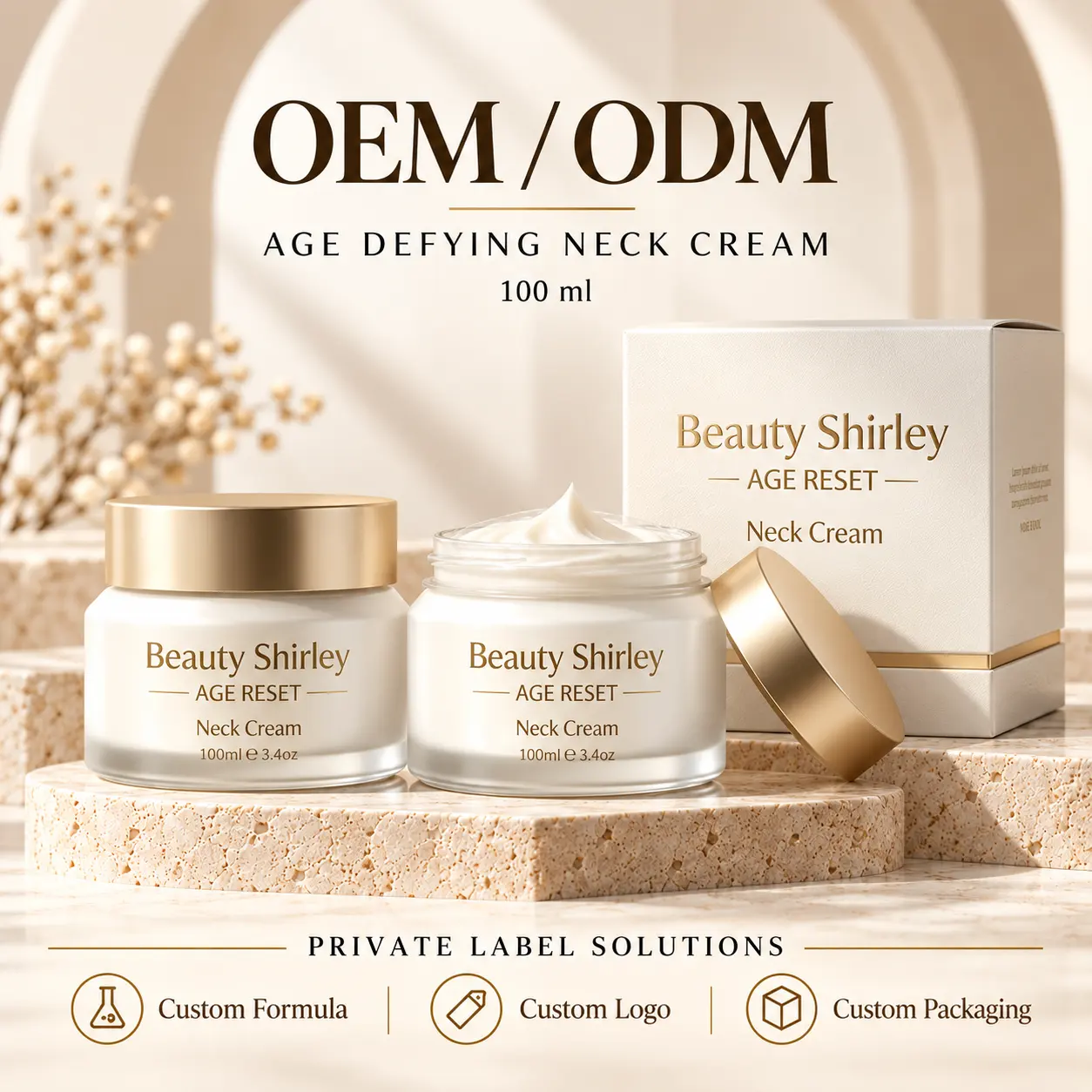
Neck cream OEM is a small category with a specific technical justification. The neck has fewer sebaceous glands than the face, thinner epidermis, and constant mechanical movement from turning and nodding. That combination produces laxity and horizontal lines earlier than the cheek does, and a face cream reformulated with a new label does not address any of it.
1. What is different about neck skin
Lower sebum means the neck dries faster and tolerates rich textures that would break out a cheek. Thinner skin means actives penetrate more easily and irritate more easily, so the retinol level has to be lower than a face product would use. Mechanical folding means a cream that does not maintain a flexible film produces lines that a static formula cannot treat.
2. The formula shape
A neck cream is typically richer than a face cream: 15 to 25 percent emollient, 3 to 5 percent emulsifier, and a higher level of film-forming and lifting polymers. Peptides, niacinamide and a low-dose retinoid carry the firming story. AHA at 3 to 5 percent is used for texture, but on thin neck skin it is a once or twice weekly product rather than a daily one.
3. The firming claim
Firming is measurable but modestly: a Cutometer or a ballistometer reading of elasticity, plus a photographic assessment of horizontal lines over 8 to 12 weeks. A cream can produce a visible tightening effect within minutes through a film-forming polymer, and that immediate effect is what most consumers perceive. The long-term claim needs the instrumental study. Be clear which one the label is describing.
4. Texture and application
The product is applied upwards and the user expects it to absorb without residue, because a sticky neck cream marks collars. A cream with 20 percent emollient can be pleasant on the neck and unacceptable on a shirt. Test the residue on fabric – a standard collar test with a defined dose and a 30-minute contact – before approving the texture.
5. Packaging
An airless bottle or a tube is the practical pack for a rich cream; a jar is traditional and lets the product oxidise. A 50 ml airless with a pump delivers a controlled dose and protects the retinoid from light. A 15 ml tube in a set is the trial size, and a duo with a neck mask is a common bundle.
6. Testing
- Elasticity and firmness by instrument at 0, 4, 8 and 12 weeks.
- Photographic grading of horizontal lines by a trained assessor.
- Fabric residue test on collar material.
- Compatibility with the airless pack over 30 days inverted.
- Irritation panel including subjects with sensitive neck skin.
7. Where the category usually fails
Most neck creams fail on one of two points. Either the texture is a face cream at a higher price, which the consumer notices within a week, or the pack is a jar that lets a retinoid oxidise before the product is half used. A third failure is the claim: a cream that promises to remove neck bands is promising something no topical product delivers, and the disappointment lands in reviews rather than in a laboratory report.
8. Commercial profile
Stock base with a custom fragrance, 50 ml airless, MOQ 2,000 units, 30 to 40 days. A new retinoid level adds four weeks of stability and tolerance work. See the neck cream range and the night cream guide for the richer end of the same chemistry.