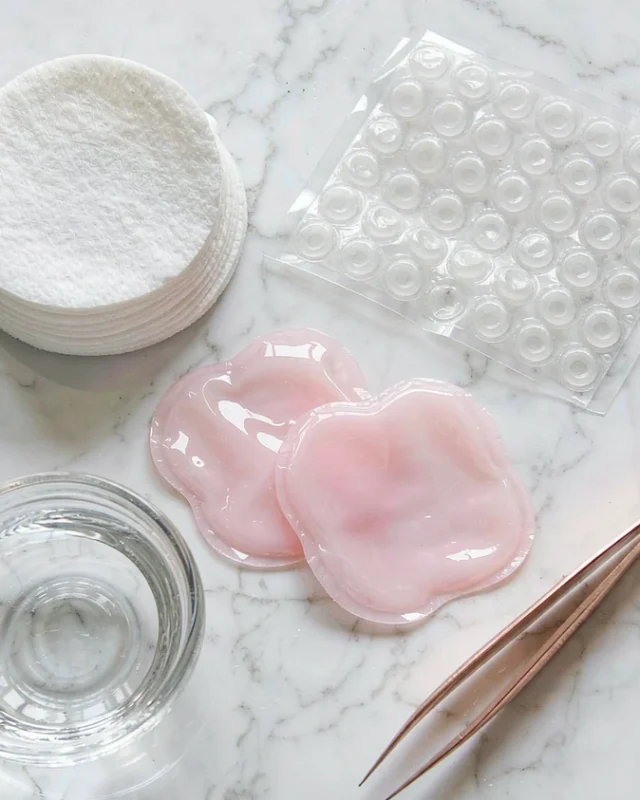
Pimple patch manufacturing is the largest single format family in the hydrocolloid space, and it is also the one where marketing runs furthest ahead of the material. A hydrocolloid patch absorbs exudate, protects the site from picking, and creates a moist environment at the surface. That is a real and useful set of functions. It is not an acne treatment, and a brand that prints treat acne on a patch made of hydrocolloid and adhesive is making a claim the material cannot support.
1. How the material works
A hydrocolloid dressing is a dispersion of hydrophilic particles – typically sodium carboxymethylcellulose with a pectin or gelatin – in a rubbery elastomer matrix, 0.3 to 0.8 mm thick, coated with a skin-grade acrylic adhesive and a release liner. When it contacts moisture it swells and forms a gel, which is why the patch turns white and opaque over a spot. The visible change is the product doing its job, and it is the single best demonstration a brand has.
2. Three grades, three prices
Economy grade: a thin 0.3 mm sheet with a basic adhesive, adequate for twelve hours, prone to lifting at the edges on oily skin. Standard grade: 0.4 to 0.5 mm with a tapered edge, the mainstream retail choice. Premium grade: 0.6 to 0.8 mm with a bevelled edge and a high-tack adhesive, which stays on through a night and a shower. The absolute cost difference between economy and premium is small, but the complaint rate difference is large, which is why most brands should not go below standard.
3. Thickness, taper and the edge
Edge design decides whether a patch is noticed. A straight-cut edge lifts within hours on a curved chin or nose. A tapered or bevelled edge blends into the skin and holds. Options include a matte finish for daytime wear, a clear finish for near-invisible use, and a micro-perforated surface for a breathable feel. Each finish needs its own adhesive trial, because the same adhesive performs differently on a matte versus a gloss film.
4. Sizes and the multi-size pack
Three sizes cover most use cases: 10 mm for a small spot, 12 mm for a standard one, and 14 to 16 mm for a cluster or a larger area. A mixed-size pack is the highest-value retail format, because the customer does not know in advance what size they will need. Mixed packs also increase the die count and the pick-pack complexity, so the unit cost is higher than a single-size pack of the same count.
5. What the patch can and cannot claim
It can claim that the patch absorbs exudate, protects the area, reduces the temptation to pick, and helps the site look calmer. It cannot claim to cure, treat or prevent acne, and in the EU and US such wording moves the product into a medicinal or device category with a different filing path. A patch that also contains salicylic acid is a cosmetic with an active ingredient and needs the corresponding safety assessment; a patch with only hydrocolloid is a dressing and should be described as one.
6. Packaging and use
- A folded sheet with a perforated release liner, which is the easiest format for a customer to handle.
- A resealable pouch for multi-size packs, with a rigid card to stop the patches curling.
- A compact case for a handbag SKU, which is the fastest-growing retail format in the category.
- Instructions to apply on clean dry skin and to leave in place for 8 to 12 hours; a patch applied over a serum lifts within an hour.
7. Commercial profile
Standard grade, 12 mm, 36 patches per sheet set, MOQ 5,000 packs, 25 to 35 days. Matte and clear finishes are stocked; a custom shape adds a die charge. See the pimple patch range, and read the private label launch checklist for the documents a retailer will request.