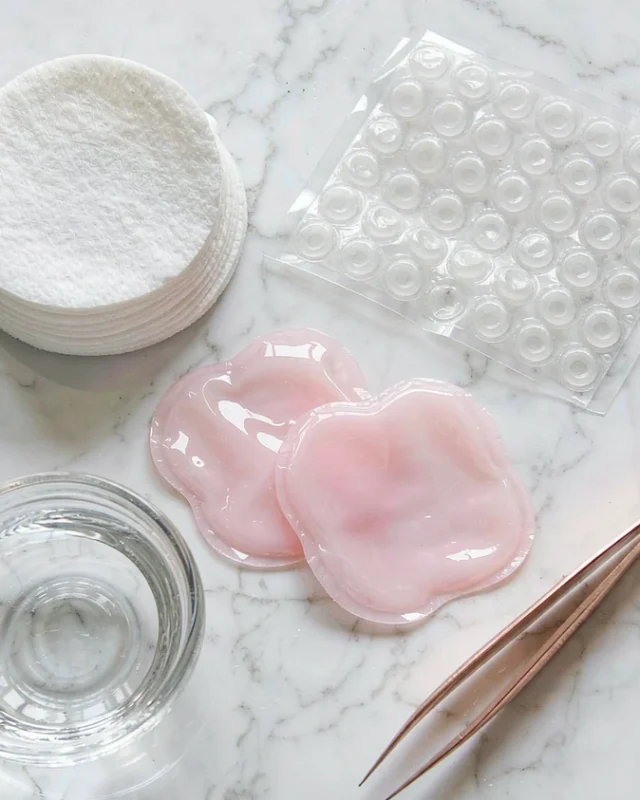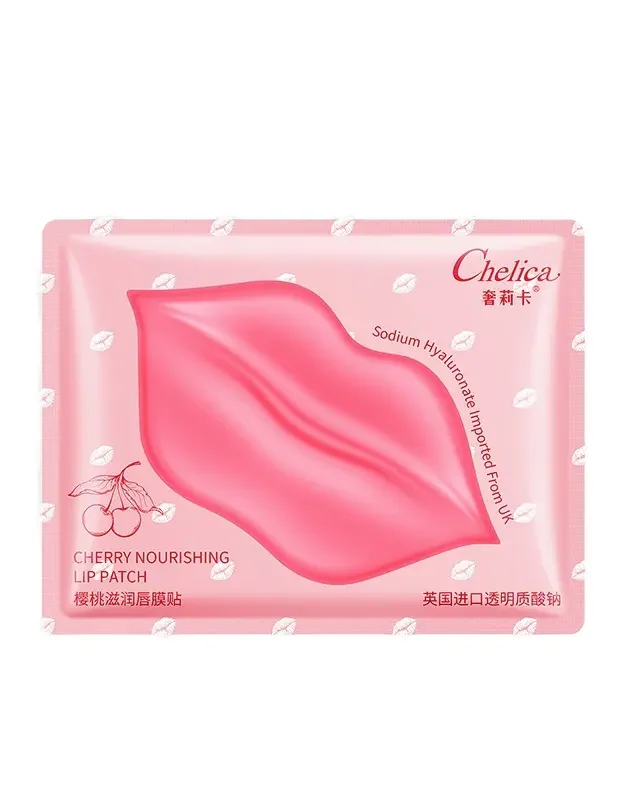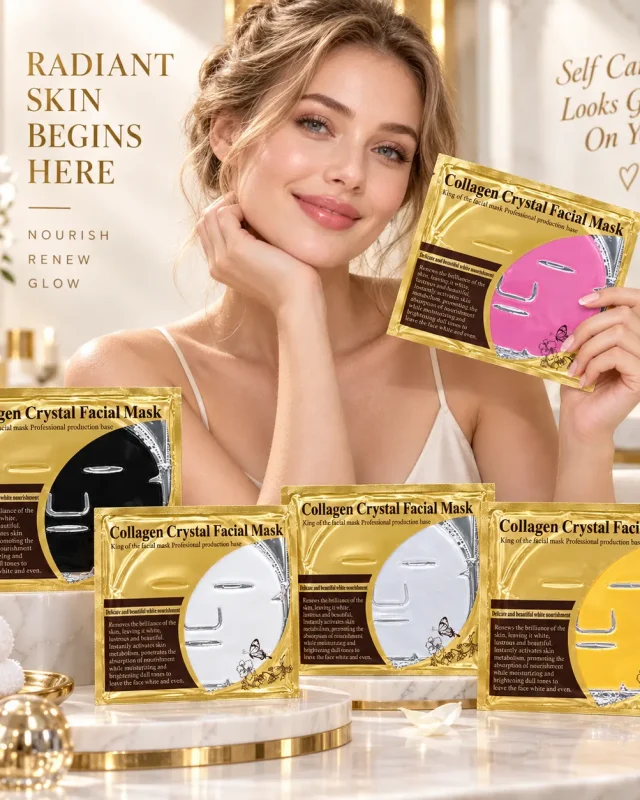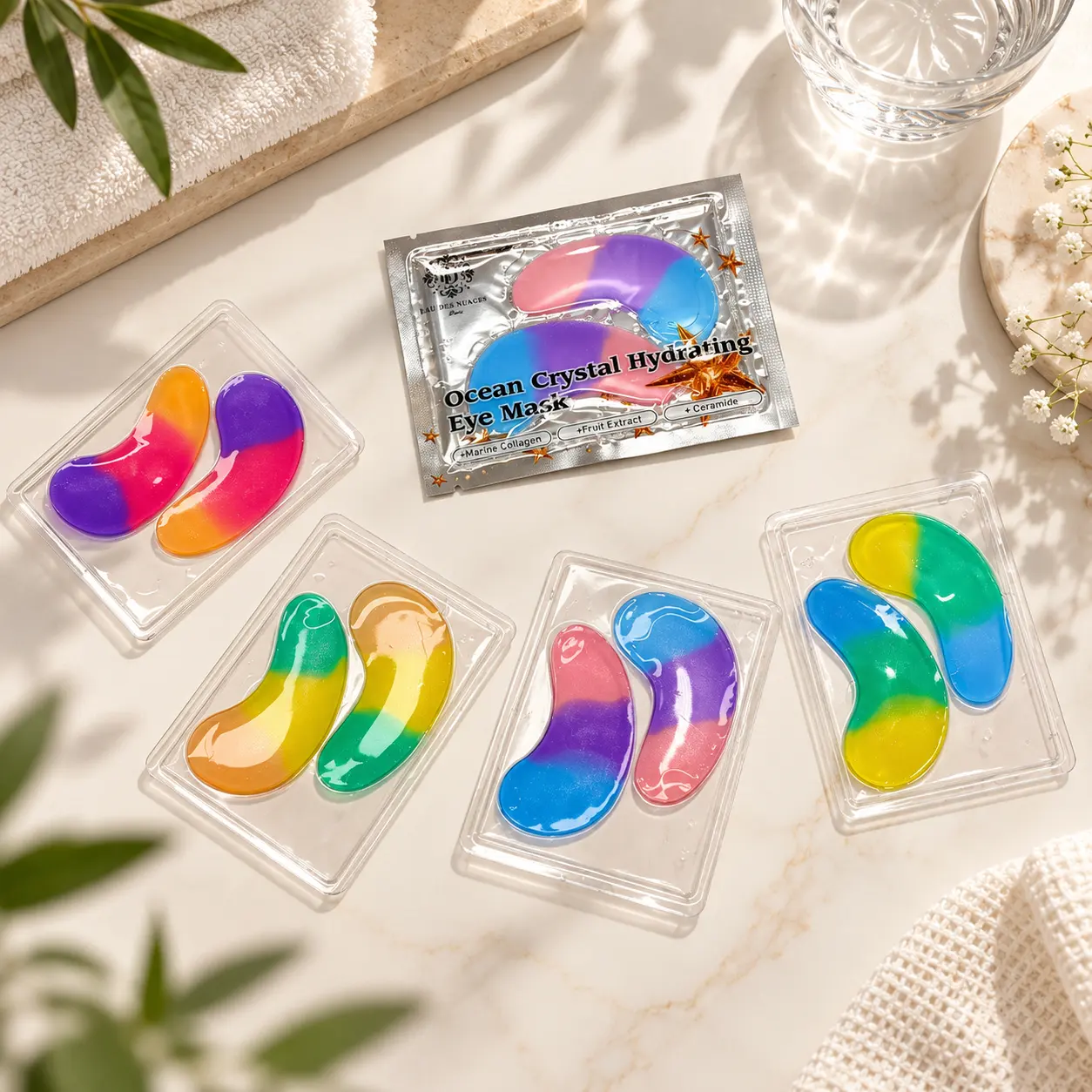
Collagen eye mask is a product name that covers three quite different materials, and choosing between them is a commercial decision as much as a technical one. The three – crystal collagen, hydrogel, and bio-collagen film – differ in how much water they hold, how they adhere, what they cost, and what they can plausibly claim. Sending a brief that says collagen eye mask without specifying which one is how a first order ends up in the wrong format.
1. Crystal collagen
The oldest and cheapest of the three. A dried collagen or collagen-blend film, 0.3 to 0.6 mm, which rehydrates when it contacts a wet serum or the skin. It feels thin and slightly papery, adheres well once wet, and holds a modest serum load. It photographs as translucent and gold-tinted, which is where the 24K association came from. Cost per pair is the lowest, and moisture loss over a 20-minute wear is the highest – a crystal patch begins to dry at the edges after about 15 minutes.
2. Hydrogel
A cast gel of 1.0 to 1.6 mm, 85 to 92 percent water, which stays wet for 30 minutes and gives a cool, cushiony feel. It holds more serum, adheres firmly on dry skin, and is the format most associated with the jarred 60-patch retail products. It is also the heaviest and the most expensive to ship, and it needs a sachet with a rigid tray to avoid deformation.
3. Bio-collagen film
A collagen film that softens and gradually dissolves on the skin over 30 to 60 minutes, sold as a second-skin experience. It has the best story and the highest material cost, and it is the most sensitive to storage humidity. A bio-collagen patch that has lost 3 percent of its moisture in the sachet becomes brittle at the edges and will not sit flat under the eye.
4. Side-by-side comparison
| Property | Crystal | Hydrogel | Bio-collagen |
|---|---|---|---|
| Wet wear time | 15 min | 30 min | 45 to 60 min |
| Serum load per pair | 2 to 3 ml | 4 to 6 ml | 4 to 8 ml |
| Adhesion on dry skin | Weak until wet | Strong | Moderate |
| Relative cost | Lowest | Medium | Highest |
| Best claim fit | Value hydration | Cooling, de-puffing | Premium, second-skin |
5. Which to choose
A jar of 60 patches for a mass-market retail line is almost always hydrogel, because the cost per pair and the wear time both work. A sachet sold at a premium price point in travel retail is usually bio-collagen, because the material story supports the price. Crystal is the format for high-volume, low-price programmes – amenity, promotional bundles, and markets where the price ceiling is fixed.
6. Testing differences
Crystal: measure rehydration time and edge drying, since both define the experience. Hydrogel: weight loss and adhesion after storage. Bio-collagen: moisture retention and dissolution time on a standardised substrate. All three: microbial limits, seal integrity, and a 40 degrees Celsius hold in the final pack. The test protocol follows the material, not the marketing name.
7. Commercial profile
Crystal from 2,000 pairs, hydrogel from 2,000 pairs, bio-collagen from 1,000 sachets, all at 25 to 40 days. See the bio-collagen eye mask range, and the hydrogel patch production guide for the sealing tolerance each material demands.