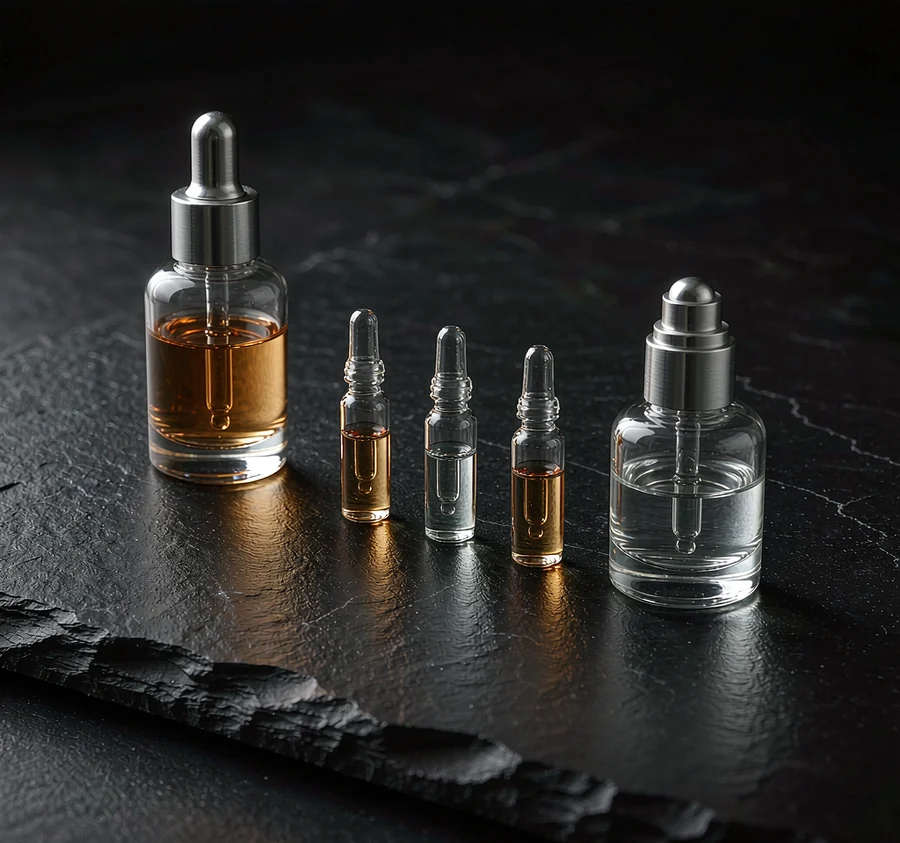
Eye care capsules are a niche inside a niche, and they exist for one reason: the eye contour is the place where a contaminated applicator does the most visible damage. A roll-on that has touched the lash line and gone back into the bottle is a bacterial culture with a metal ball. A sealed bead cannot be re-entered. That argument, more than any formulation advantage, is why the format keeps reappearing in travel, amenity and clinical-looking ranges.
1. What goes in the bead
Eye contour fills are light and low-viscosity: 0.2 to 0.5 ml of a serum built around caffeine for a temporary de-puffing effect, a low-molecular hyaluronate for hydration, peptides for texture claims, and sometimes a light ester for slip. The formula has to be ophthalmologically considerate – no fragrance, no essential oils, no high levels of glycols, and a pH between 5.5 and 7.0. Anything that stings is remembered and reviewed.
2. Break-open force is a design constraint
A bead handled near the eye must open with a twist between the thumb and forefinger, not a snap that sprays product. We target a break force of 2.5 to 3.5 newtons on a 0.3 ml bead, measured on a texture analyser. Below 2 newtons the bead opens in the jar during transport; above 4.5 newtons customers use their teeth, and the review writes itself. This is a shell gauge and drying question, not a marketing one.
3. Format comparison
| Format | Hygiene | Dose control | Cost | Best use |
|---|---|---|---|---|
| Single-dose bead | Excellent | Fixed | Highest | Travel, sampling, clinical ranges |
| Roll-on | Poor after first use | Poor | Low | Mass retail, repeat purchase |
| Dropper | Moderate | Moderate | Low | Premium serums |
| Stick | Moderate | Fixed | Medium | On-the-go touch-ups |
4. Application instructions matter more here
The eye contour is 0.5 mm thick and the product volume that should be applied is tiny. A 0.3 ml bead is roughly three times a sensible single application, so the instruction has to say: open, tap a small amount under the eye, and use the remainder on the second eye or the nasolabial fold. Brands that skip this instruction get reviews complaining the product is sticky and never empties.
5. Testing
An ocular irritation screen (typically an in vitro model plus a human patch test) is the baseline for anything used this close to the eye. A 28-day use test with 30 participants gives the perception data for a de-puffing claim, and instrumental measurement of oedema or colour is worth having if the claim is specific. Claims that mention dark circles need colorimetry data, not photographs.
6. Commercial profile
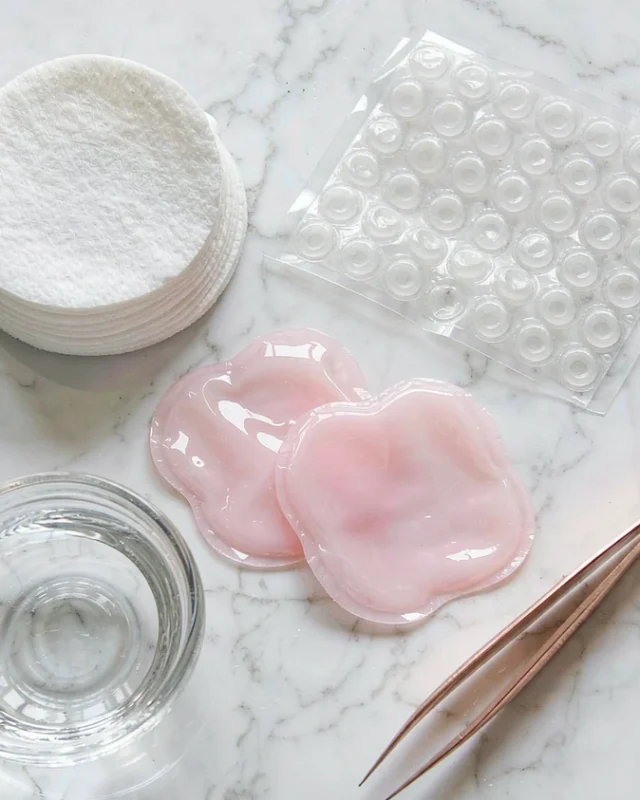
Stock eye serum, 0.3 ml fill, 30 or 60 beads per jar, MOQ from 500 pieces, 25 to 35 days. A larger 0.5 ml fill moves to a standard serum die and is cheaper per millilitre. A custom shell colour for a clinical range adds tooling. See the eye care capsule listings, and if the launch is a patch rather than a bead, the hydrogel eye patch guide covers that format in detail.
7. Where the format loses to a patch
Honesty matters here. A bead delivers a serum, and a patch delivers a serum plus 20 minutes of occlusion, which is why patches dominate the under-eye category. If your brief is de-puffing, the patch wins. If your brief is a concentrated serum that travels, or a treatment for the lids and the outer corner where a patch does not sit well, the bead is the better answer. Brands that try to sell a bead as a substitute for a patch usually end up repositioning the product after the first sell-in.
8. Where the format wins
Three situations favour the bead: an amenity or travel programme where a sachet is too bulky, a subscription box where a 30-bead jar is a full month, and a clinical-looking range where the sealed unit is part of the safety story. In each case the selling point is the absence of an applicator, and the copy should lead with that rather than with an efficacy claim the format cannot match.