A capsule filling line changeover looks like a maintenance task and behaves like a revalidation. The die, the drying tunnel, the inspection thresholds, and in most cases the stability file, all move together. Brands are often quoted a four-day changeover and then discover a ten-week launch delay, because the quote covered the mechanical work and not the qualification that follows it.
1. What changes with fill volume
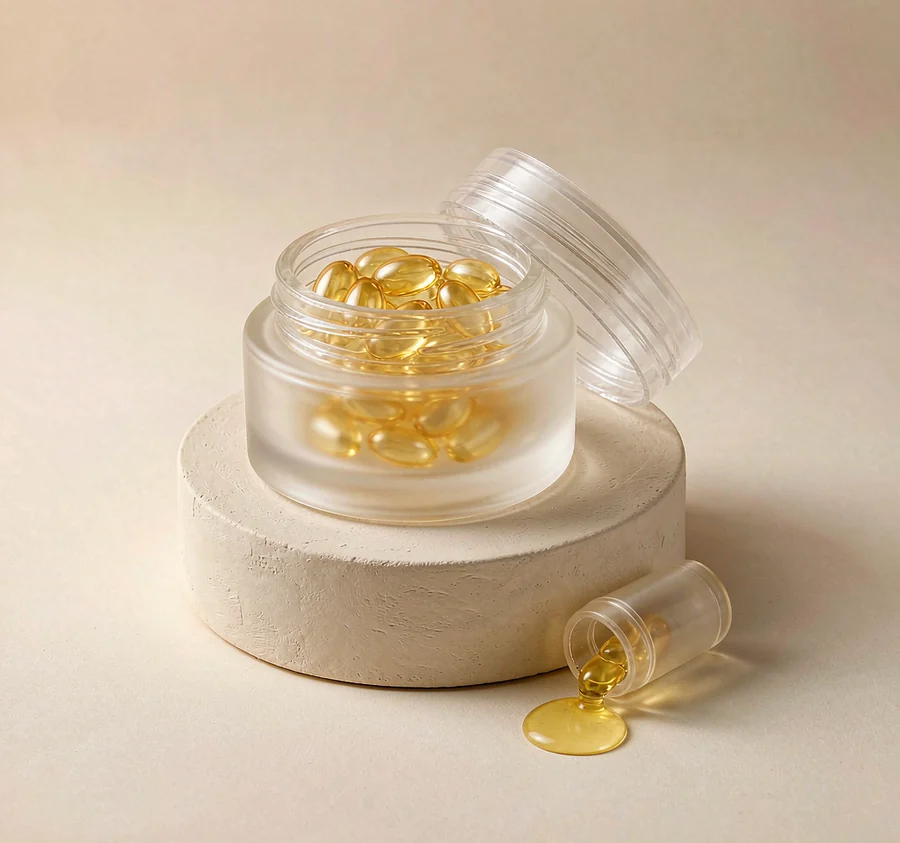
Going from 0.5 ml to 1.0 ml doubles the bead volume, and the bead is a three-dimensional object: the shell surface area grows by roughly 1.6 times, the wall thickness has to rise to carry the mass, and the fill nozzle has to be re-orificed. In practice that means a new die set, a new drying profile (longer, because a thicker shell holds more water), and a new inspection recipe because the bead silhouette has changed. On our line that is two to three days of mechanical changeover and two weeks of qualification runs.
2. Shell material change is the expensive one
Gelatin to HPMC is not a swap of one drum for another. HPMC sets by a different mechanism, so the casting drum temperature, the die temperature, the seam pressure and the tunnel humidity curve all shift. Expect three to four weeks of trials to find a stable window, and expect the first two attempts to produce beads that look acceptable and fail the leak test. Any change here also resets the stability file: the shell is part of the primary pack, and a shell change invalidates the previous real-time data.
3. The qualification runs nobody budgets for
- Engineering run, 5,000 to 20,000 beads, no customer product. Purpose: find the machine window.
- Performance qualification, three consecutive batches at target speed, with fill weight, seam integrity, and leak test recorded. This is the batch that proves the line, not the sample you approved by hand.
- Stability initiation, if the shell or fill changed, on the market-ready pack.
- Artwork and label reconciliation, because the net content changed and the label has to match.
4. What the customer actually notices
Three things. A later launch date. A sample that does not match the production bead, because the hand sample came off the engineering run. And a variance in fill weight that shows up in a retail audit rather than a lab. The third is the one that costs money: a net content shortfall is a regulatory issue in most markets, and the fix is a reprint plus a rework, not a phone call.
5. How to plan a switch without losing a season
Work backwards from the retail on-shelf date: subtract 30 days freight, 30 days production, 30 days packaging print, 21 days qualification, and 28 days sampling. That is roughly four months before a single bead is sold, and it assumes the formula is already selected. A brand planning a Q4 launch with a format change in August is planning a Q1 launch.
6. The questions to ask before signing
- Is the die stock or custom, and who owns it?
- Does the changeover quote include qualification batches?
- Which stability tests restart, and at whose cost?
- What is the scrap and rework policy on the first three batches?
- Can the old format keep running in parallel during qualification?
Running in parallel matters more than it sounds. A line that is switched over completely cannot fill the current SKU while the new one is being qualified, which turns a technical task into a stock-out. See the capsule serum range for the formats currently qualified on our dies, and read what a 36-month shelf life claim requires before you plan the switch.