V-line lifting mask is a category built on a specific visual promise: a sharper jawline within twenty minutes. Some of that effect is real, some is a temporary tissue-fluid shift, and some is a photograph taken from a flattering angle. Brands that understand which is which can build a product that survives scrutiny. Brands that do not get a first order, a launch, and a wave of before-and-after comparisons on social media.
1. Three mechanisms, three durations
The mechanical route: a sheet or strap that applies upward tension via adhesive or elastic, pulling the jaw tissue into a lifted position while the product sets. Effect lasts as long as the mask is on, plus a short after-effect from tissue displacement. The osmotic route: high glycerin or a salt-rich gel draws fluid from the tissue, reducing puffiness for a few hours. The active route: peptides and caffeine that act over weeks on the appearance of firmness, with no immediate visual change. A serious product uses the first to create the demonstration and the third to justify a repurchase.
2. The substrate and the strap
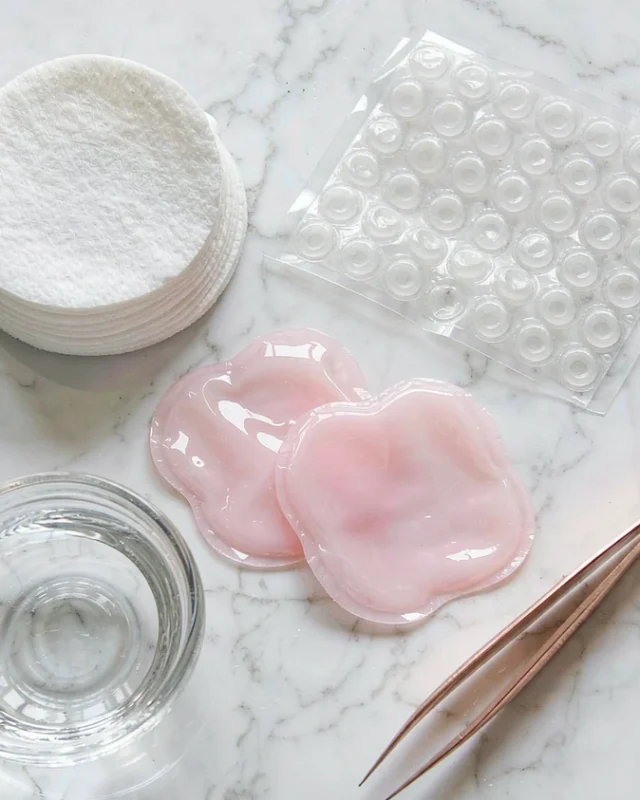
A V-line mask is usually a hydrogel or a non-woven piece with ear loops or a chin strap. The strap has to hold 150 to 250 grams of tension for 20 minutes without pulling the ears forward; a strap that is too tight is remembered as uncomfortable, and one that is too loose does nothing. We test strap force on a tensile rig at three extension levels and run a 20-minute wear test on ten subjects, measuring whether the mask stays in position when the wearer talks.
3. Formula for a visible lift
The immediate effect comes from a combination of humectant load and a mild astringent sensation. Glycerin at 10 to 15 percent in the gel, plus a low level of a botanical astringent, gives a tightening feel that reads as lifting. Menthol and camphor create a cooling illusion that many consumers interpret as activity – they are legitimate in small amounts, but they also cause redness in sensitive users and are restricted in some markets.
4. Testing a claim that is inherently comparative
The defensible test is standardised photography: fixed distance, fixed lighting, fixed head angle, before and immediately after 20 minutes, on 30 subjects, with the images assessed by a blinded panel and by a jawline angle measurement from a fixed landmark. Anything less – a phone photo in a bathroom – is marketing, not evidence. If the claim specifies a time frame such as visible lift in 20 minutes, the test must be run at that interval, not at four weeks.
5. What to avoid saying
Lifting and firming are cosmetic claims in most markets when framed as appearance. Reshaping the jaw, reducing a double chin, or any wording that implies a change to anatomy moves the product toward a medical or device classification. Slimming and contouring are borderline and should be checked per market. The safest framing is around the appearance of a more defined jawline with a stated duration.
6. Packaging and use instructions
Single sachet with a folded mask and a strap, or a pair of sachets for a two-week course. The instruction matters: clean dry skin, strap on, 20 minutes, remove and massage the residue in. Customers who apply to a wet face get a mask that slides, and customers who leave it on for an hour get irritation.
7. Commercial profile
Stock hydrogel piece, 25 to 30 ml serum, MOQ 1,000 sachets, 25 to 35 days. A custom strap or a shaped die adds three to four weeks. The V-line lifting mask page shows the current shapes; the hydrogel production guide explains why the gel thickness constrains the strap design.