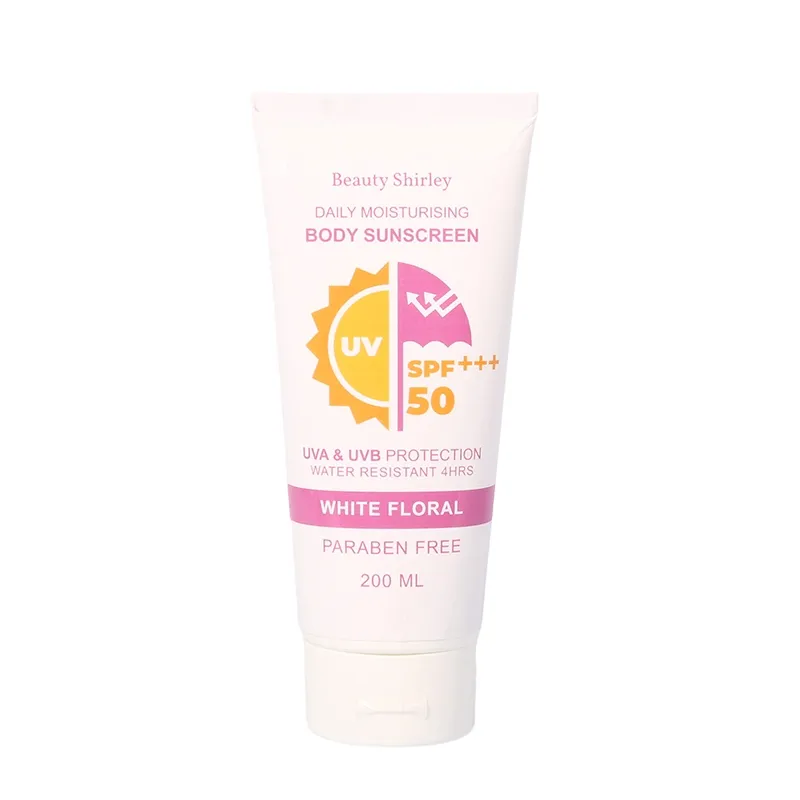
Sunscreen manufacturing is the most heavily regulated segment in cosmetic production. Every other product in this plant is judged on how it feels and how it looks; a sunscreen is judged on a number that a laboratory produces, and the number has to be reproduced on every batch, in every market, for the life of the product. A brand entering the category with a sample that feels good and no test protocol is not ready to launch.
1. The emulsion system
Most sunscreens are oil-in-water emulsions at 60 to 75 percent water, with the UV filters distributed in the oil phase or suspended as inorganic particles. The film that remains after the water evaporates is what protects, so the emulsion has to leave a film of even thickness, not a patchy one. Film formers – acrylic copolymers, dimethicone crosspolymers – are added at 1 to 3 percent specifically to make the film uniform and water-resistant. A sunscreen that fails in-use testing often has a film-forming problem, not a filter problem.
2. Organic, inorganic and hybrid
Organic filters absorb UV and are usually easier to formulate into a cosmetically acceptable texture; inorganic filters – zinc oxide and titanium dioxide – scatter and absorb, and are favoured in the clean-beauty segment. Inorganic filters at the load needed for a high SPF produce whitening unless they are coated and dispersed properly. A hybrid with an organic filter for UVB and a coated inorganic for UVA is the most common route to a high SPF with an acceptable finish.
3. The SPF test
In vivo SPF follows a defined protocol on human volunteers, with a defined application rate of 2 mg per square centimetre and a defined UV source. It is expensive, it takes six to ten weeks, and it is the only method accepted for a label claim in most markets. In vitro methods exist and are useful for screening and for UVA protection ratios, but they cannot replace the in vivo value for the printed SPF. Budget the test as part of the project, not as an optional extra.
4. Water resistance
Water resistance is a separate claim with its own protocol: measure SPF after two immersions of 20 minutes, and for the 80-minute claim after four. Most failures come from the film former being underdosed, or from an emulsifier that redisperses the film on contact with water. If the product is for sport, test it, and if the claim is not tested, do not put it on the front.
5. Filling
Sunscreen fills into tubes, pumps, airless bottles and sachets. The viscosity is typically 8,000 to 20,000 centipoise, which is thick enough to fill gravimetrically but prone to air entrapment. An air pocket in a tube is a customer complaint on first squeeze. Inline deaeration and a slow fill with a positive displacement pump resolve it. Tubes need a hot-fill or a cool-fill decision: a hot fill at 60 degrees Celsius needs a compatible tube laminate, and a cool fill needs a preservative system validated for the cooler process.
6. Stability and photostability
A sunscreen is exposed to UV, heat and water repeatedly in use. Stability testing must include a photostability study – irradiate the product and measure the SPF change – plus three months at 40 degrees Celsius for emulsion and viscosity drift. A sunscreen that loses 30 percent of its SPF under irradiation is a product that will be reformulated before the second season.
7. A realistic project
Formula development, three to four months including pilot batches. In vivo SPF and UVA, six to ten weeks after the final formula. Stability and photostability in parallel, three months. Regulatory review per market, one to two months. Total 8 to 12 months before a first shipment, and 12 to 14 for a multi-market launch. See the sunscreen range and the photostability guide for the test schedule.