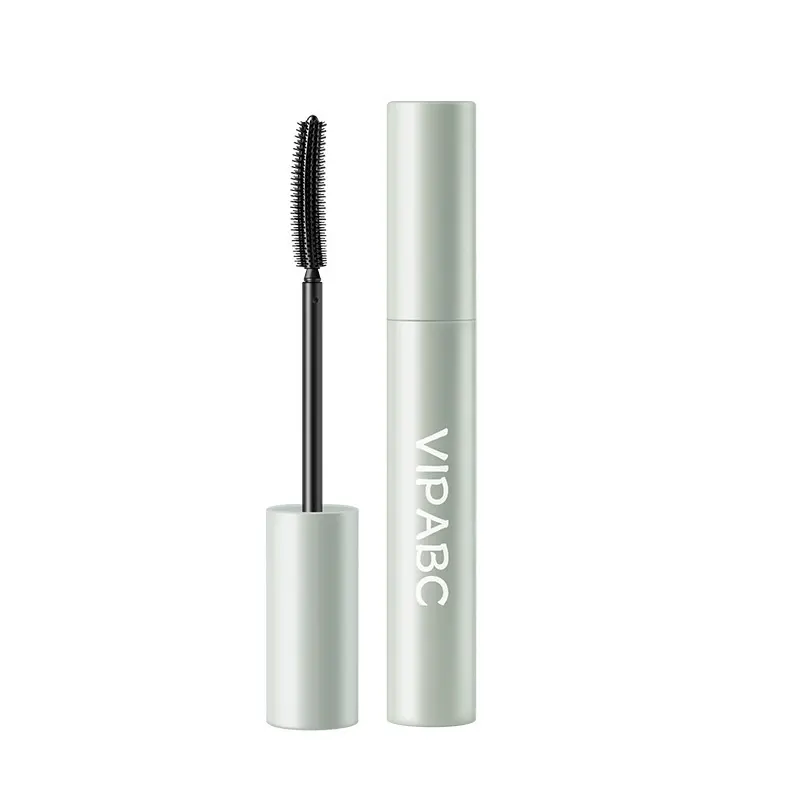
Mascara manufacturing is a small-volume, high-complexity category. The formula is an emulsion of waxes and polymers with pigment, the applicator is a moulded brush that decides how the product is delivered, and the failure that generates complaints – smudging under the eye by midday – is caused by the film former being incompatible with the wearer’s skin oil rather than by the formula being wrong in isolation.
1. The formula architecture
A mascara is 60 to 75 percent water, 8 to 15 percent wax, 5 to 12 percent film-forming polymer, 5 to 10 percent pigment, plus a thickener and a preservative. The wax gives volume, the polymer gives length and curl retention, and the pigment gives black. A volumising mascara pushes the wax up; a lengthening mascara pushes the polymer up. Both need a thickener that holds the brush load without making the product clumpy.
2. The polymer choice
Acrylic copolymers give strong curl retention and a slightly stiff film, which is the basis of most long-wear mascaras. Polyurethane dispersions give flexibility and a softer feel, at a higher cost. A blend of the two is the usual compromise. The polymer load also decides removability: a high acrylic load resists warm water and requires an oil cleanser, which should be stated on the pack.
3. The brush
The brush does half the work. A dense bristle brush with a tapered head separates lashes and gives definition; a spiral brush with soft bristles gives volume; a curved brush lifts the outer corner. The brush is a moulded component with a tooling cost, and the mould is usually owned by the brush supplier rather than the filler. A brand choosing a stock brush can launch in weeks; a custom brush adds eight to twelve weeks and a tool charge.
4. The smudge test
Apply two coats to twelve subjects, incubate at 37 degrees Celsius for four and eight hours, and photograph the under-eye area under standard lighting. A mascara that transfers a visible line under the lower lash line at four hours has failed. The usual cause is a wax with a low melting point combined with a film that does not set, and the fix is usually a higher polymer load or a harder wax rather than a new pigment.
5. Preservation and the eye-area standard
A mascara is an eye product, which means the microbial standard is higher and the preservative has to be effective against the organisms introduced by the brush. Challenge testing per ISO 11930 plus a specific eye-area safety assessment is mandatory in the EU. A mascara that fails the challenge test cannot be sold at any price point, and reformulating a failed preservation system late in a project is one of the most expensive delays in the category.
6. Filling and the tube
Mascara fills into a tube with a wiper that controls the dose on the brush. A wiper that is too tight gives a dry application; one that is too loose gives a clumpy one. The fill weight is typically 6 to 10 ml, and the tube has to be opaque enough to protect the polymer from light. Test the pack for leakage under 30 days inverted and for wiper performance after 100 open-close cycles.
7. Commercial profile
Volumising black, 8 ml tube, MOQ 3,000 units, 30 to 40 days. See the eye makeup range and the eyeliner guide for the other core eye product.




