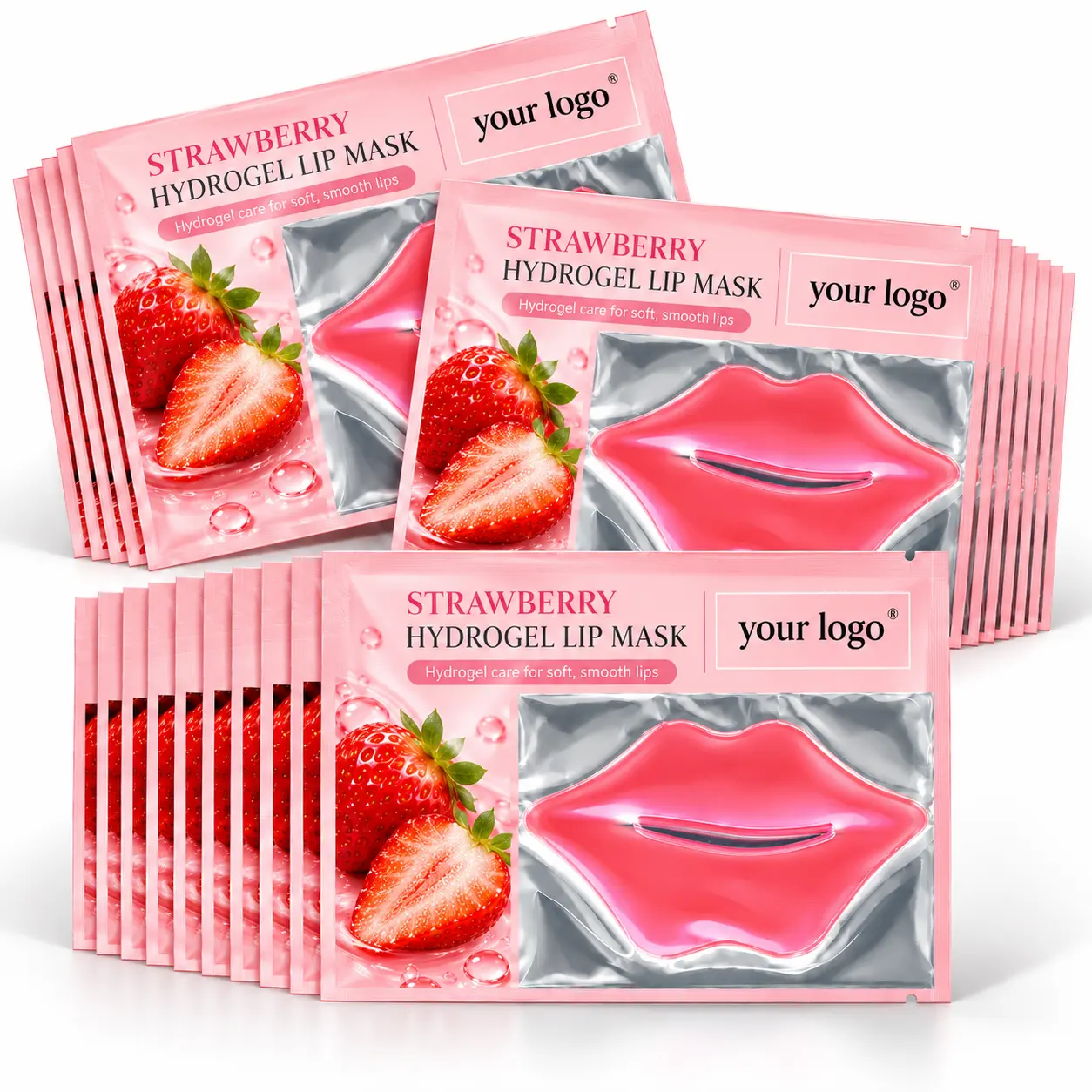
Lip mask stability testing is not a formality. A lip patch holds 3 to 4 ml of product in a thin gel with a high surface-to-volume ratio, sealed in a sachet whose barrier is good but not absolute. The failure modes that appear at three months – dried edges, colour shift, flavour fade, seal creep – are all predictable, and all of them are cheaper to find in a stability chamber than in a customer’s bathroom.
1. Weight loss and the dry edge
The most common defect is a patch whose top edge dries and curls inside an intact sachet. The cause is water migration through the seal and the film, not a leak. Measure weight at 0, 1, 2, 3 and 6 months at 25 degrees Celsius and at 40 degrees Celsius, and set a specification: no more than 3 percent loss at 6 months. Above that, the edge behaviour changes and adhesion fails.
2. Colour shift
Fruit colours, natural extracts and vitamin C all shift. Measure L, a and b values on a fixed patch position at each pull. A visible shift at 3 months at 40 degrees Celsius predicts a shift at 18 months at ambient, and a gift set with a colour-shifted patch is a complaint even when the product works.
3. Flavour fade and migration
Flavour oils are volatile and lipophilic. They migrate into the polyethylene or aluminium layer of the sachet, and they leave the gel. The result is a patch that smells of the film and tastes of nothing. A sensory panel at 0, 3 and 6 months catches it; a gas chromatography test on the film confirms it. The mitigation is a higher flavour load with an encapsulated flavour, or an aluminium-containing sachet that resists absorption.
4. Emulsion and gel stability
A lip mask is usually a gel rather than an emulsion, which reduces the split risk but introduces syneresis – water separating from the network and pooling at the bottom of the sachet. A gel with a carrageenan or gellan base and a high humectant load is prone to it at 40 degrees Celsius. Test by tilting the sachet and looking for free liquid; any visible pooling is a fail. Adding a small amount of xanthan or a gellan blend usually resolves it.
5. Seal integrity
| Test | Method | Pass criterion |
|---|---|---|
| Dye penetration | Sealed sachet in dye bath, 30 min | No ingress at the seal |
| Burst | Increasing internal pressure | Above handling force with margin |
| Peel strength | Instron, 180 degree peel | Within the validated range |
| Drop | 1.2 m, six faces | No leak, no deformation |
6. Microbiology
The gel contains water, so the preservative system has to be validated with ISO 11930, and microbial limits at release follow ISO 17516. A lip product is also a product the user may ingest in trace amounts, so the preservative choice should consider oral exposure – phenoxyethanol is widely used, parabens are accepted in most markets, and some markets restrict specific systems for lip use.
7. A stability plan that matches the shelf life
Three months at 40 degrees Celsius, six months at 30, twelve months at 25, plus freeze-thaw and a light exposure set. If the declared shelf life is 24 months, add a 24-month ambient pull – there is no shortcut that substitutes for real time on a lip product, because the failure is water loss and water loss is slow. See the lip mask range and the claims guide for how stability data feeds the label.




