Cleansing balm manufacturing is a balance between two opposing requirements: it has to melt on contact, dissolve sunscreen and long-wear makeup, and then emulsify with water and rinse away without leaving a waxy film. Get the first part right and the balm sells once; get the second part right and it sells repeatedly.
1. The base
A cleansing balm is typically 10 to 20 percent wax or butter, 40 to 60 percent oil, 10 to 20 percent ester, and 5 to 12 percent emulsifier. The wax gives structure at room temperature and melts at 32 to 38 degrees Celsius, which is the temperature at which the balm should start to spread. A balm that melts at 42 degrees feels hard and needs warming in the hands; one that melts at 28 degrees collapses in a warm bathroom.
2. Emulsifier choice
A PEG-based emulsifier with a low HLB gives fast emulsification and a milky rinse. A polyglyceryl ester gives a gentler, less stripping rinse and is the choice for a sensitive-skin position. A blend of the two is common. The key number is the emulsifier-to-oil ratio: below 5 percent the balm will not rinse fully, above 15 percent it strips and the skin feels tight. Some balms use a small amount of a sulfate-free surfactant to accelerate the rinse, at the cost of a slightly less luxurious melt.
3. The residue test
Apply 1 g to a standardised substrate, add water at 32 degrees Celsius, massage for 30 seconds, rinse for 15 seconds, dry, then weigh the residue. Below 3 percent is a clean rinse; above 8 percent leaves a film that shows up as a dull finish and later as a breakout. Run the same test with a long-wear foundation as the substrate; a balm that clears the plain substrate but not the makeup one is not a makeup remover.
4. Makeup removal performance
Test with three products: a long-wear foundation, a waterproof mascara and a mineral sunscreen with inorganic filters. Score removal on a 0 to 4 scale by a trained assessor under standard lighting. A balm that clears foundation and mascara but leaves a sunscreen film is common, because inorganic filters sit in a silicone base that a light oil does not fully dissolve. A slightly higher ester load usually resolves it.
5. Preservation
An anhydrous balm needs no preservative, but a balm in a jar is a finger-contact product and the surface can become contaminated. A small amount of a preservative is often added defensively, and a challenge test is advisable if the product is water-adjacent – which a balm in a bathroom is. A spatula in the lid solves more of the problem than an extra preservative.
6. Texture and packaging
A balm is usually packed in a 90 to 100 g jar, and the jar has to be wide enough for two fingers. A tube is possible for a softer balm but dispenses inconsistently in cold weather. A jar with a spatula and a printed instruction to use dry hands is the standard, and the dry-hands instruction matters: a wet hand emulsifies the surface layer and ruins the melt.
7. Commercial profile
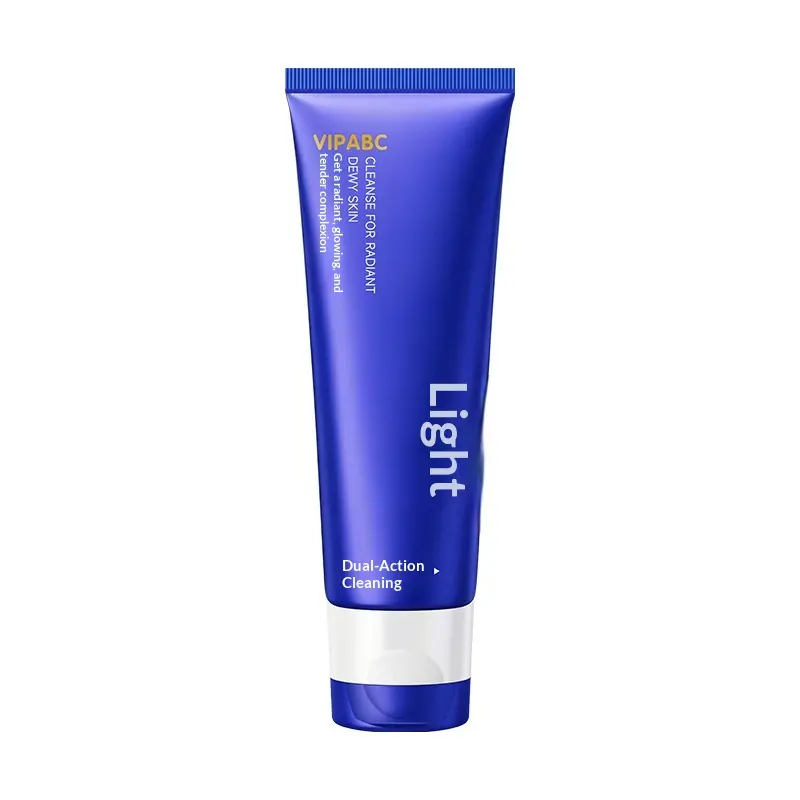
Stock base with a fragrance option, 90 g jar, MOQ 2,000 units, 25 to 35 days. A new emulsifier blend adds three to four weeks of stability and residue work. See the cleanser range and the remover balm guide for the adjacent format.