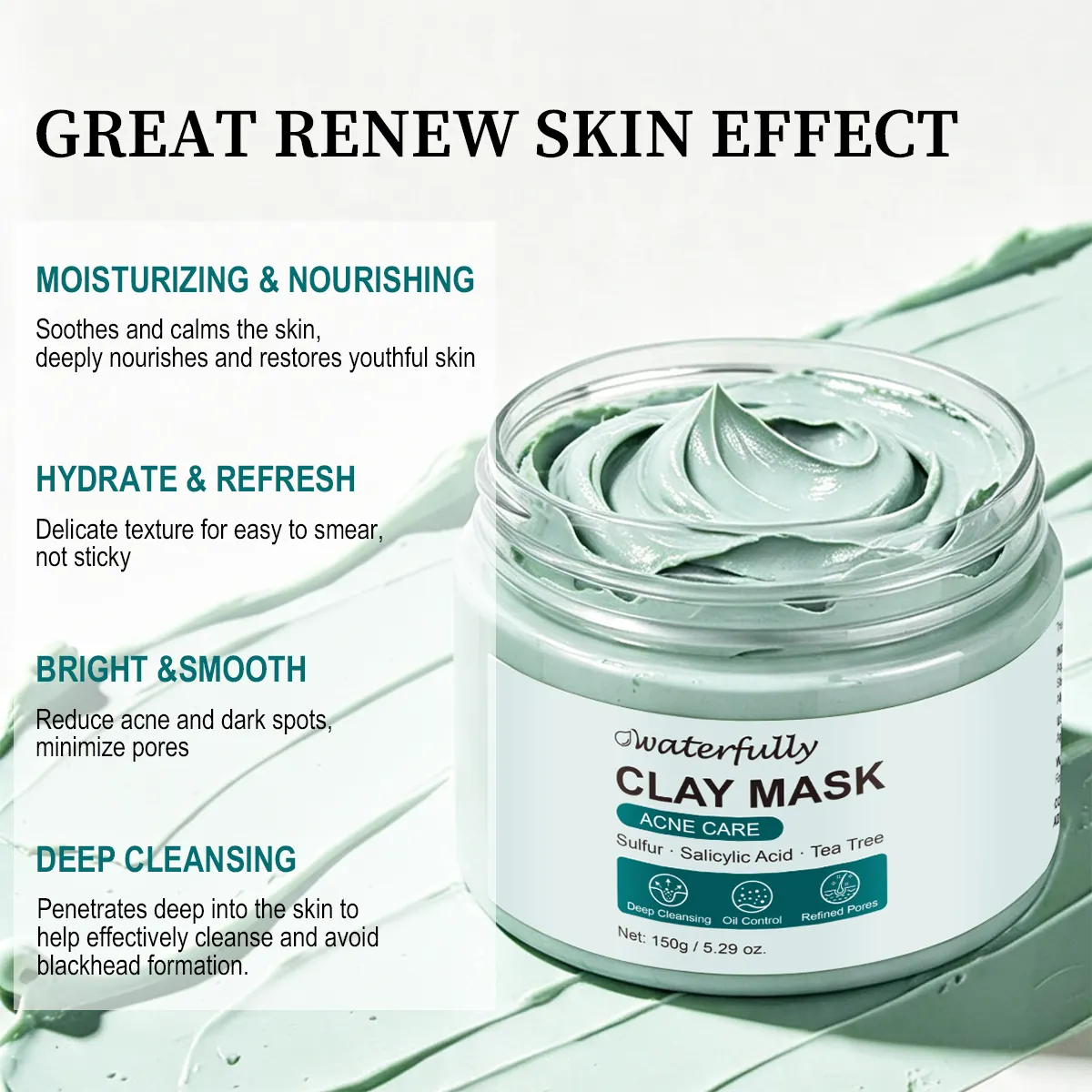
Clay mask formulation looks like the simplest brief in cosmetics – clay, water, a preservative – and it is one of the easiest to get wrong. Clay is a mineral with a variable composition, it absorbs oil and water indiscriminately, and it dries into a brittle film that cracks, pulls and sometimes stings. The difference between a mask people repurchase and one they abandon after two uses is usually the clay blend and the humectant load, not the hero ingredient on the label.
1. The four clays that matter
Kaolin is the mildest and the whitest. It cleanses gently and dries slowly, which makes it the base for sensitive-skin and weekly-use masks. Bentonite swells strongly, absorbs a lot of sebum, and dries fast and hard – excellent for oily skin, unforgiving on dry skin. Illite and montmorillonite sit between the two, with better mineral storytelling and a smoother draw-down. Fuller’s earth is the strongest absorber and is usually blended rather than used alone. Most commercial masks are a blend of two or three, with kaolin providing the body and bentonite providing the performance claim.
2. Ratios that behave
A practical blend for a general-purpose mask is 25 to 35 percent clay solids, split 60/40 kaolin to bentonite. For a sensitive-skin variant, drop bentonite below 5 percent and add 3 to 5 percent of a soft absorbent such as zinc oxide or a starch. Above 40 percent solids the paste becomes difficult to fill and dries within minutes of application, which customers read as a defect.
3. Slowing the dry-down
Glycerin at 5 to 8 percent, plus a small amount of a polysaccharide such as xanthan or sclerotium gum, extends working time and reduces cracking. A light emollient ester at 2 to 4 percent keeps the film flexible so it lifts rather than flakes. Adding a little magnesium aluminium silicate improves suspension so the clay does not settle in the jar during storage, which is a frequent quality complaint in a 200 g tub.
4. Preservation in a mineral matrix
Clay binds preservatives and reduces their free concentration, so a challenge test on the finished paste is essential – a standard 1 percent phenoxyethanol system that passes in a gel may fail here. Clay also carries its own microbial load, and the raw material specification should include bioburden limits and a certificate for each lot. A mask that fails a challenge test will fail in a customer’s bathroom, usually in summer.
5. Fill, packaging and the drying-in-jar problem
Clay paste is abrasive and viscous: a piston filler with a wide nozzle and a tube or jar with a generous neck is the practical route. In storage, the top surface of a jar dries within weeks unless the lid seals tightly and the headspace is small. A tube solves this completely and is the format most formulators now recommend for anything above 100 g.
6. Testing that supports a claim
Sebum absorption can be measured gravimetrically on a standardised substrate. Pore appearance claims need image analysis on a panel, and pore-cleansing claims are cosmetic in most markets but need consistent methodology across batches. A 4-week consumer test with 30 users provides the perception data for texture and rinsing claims, which is where most of the real satisfaction sits.
7. Commercial profile
Stock clay blend, 100 g tube or 120 g jar, MOQ 1,000 units, 25 to 35 days. A mineral blend for a specific claim adds two to three weeks of sampling. The clay mask range lists the stocked bases; the overnight mask guide covers the leave-on alternative if your brief is hydration rather than detox.




