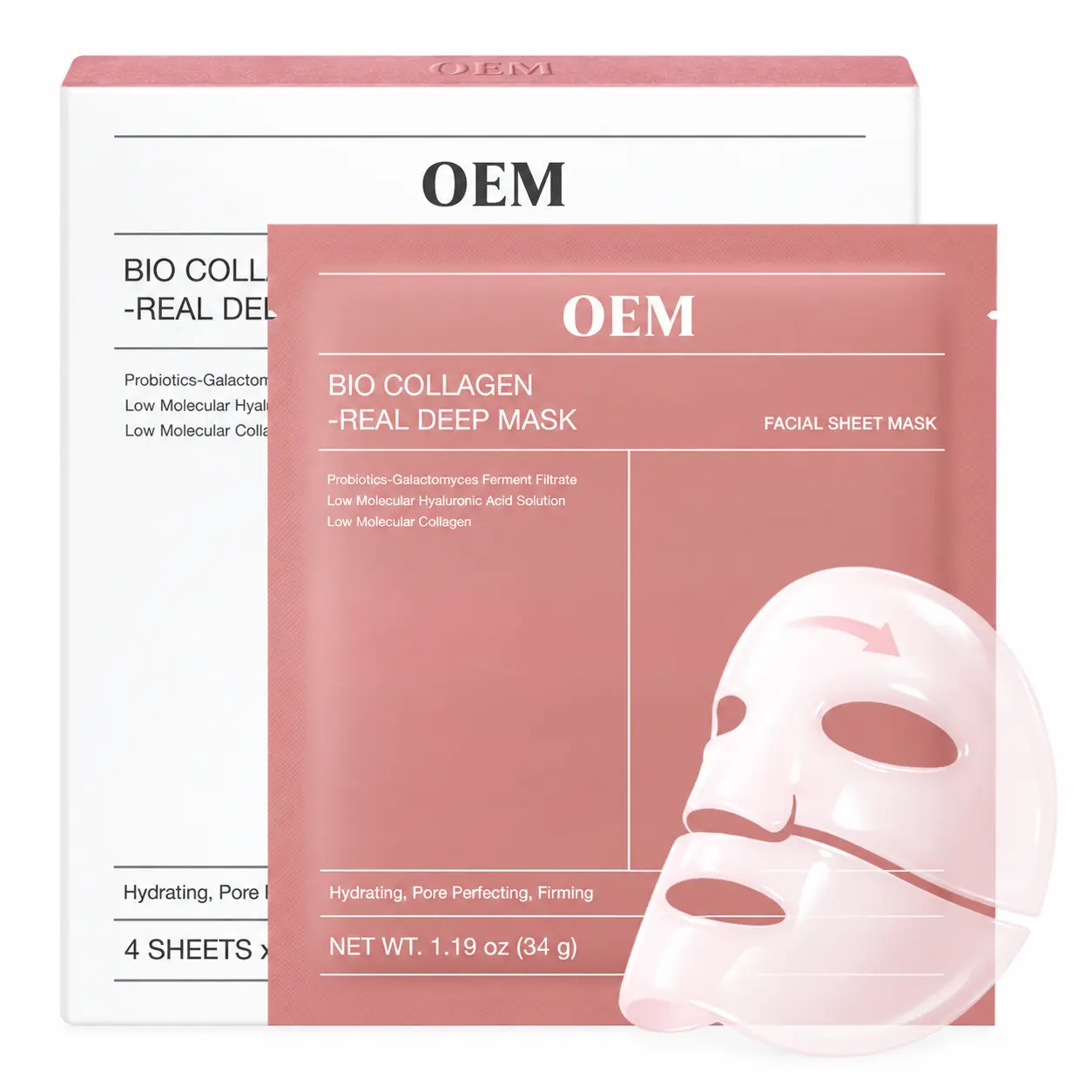
Bio-collagen face mask OEM is a category built on a material story, and the story is mostly true: a sheet of hydrolysed collagen that dissolves or softens on the skin, holds a large serum load, and photographs beautifully. What the story usually omits is the engineering: how much the sheet can hold without sagging, how it behaves at 40 degrees Celsius in a warehouse, and how much of the claimed active is actually in the sheet rather than in the sachet.
1. What the substrate is
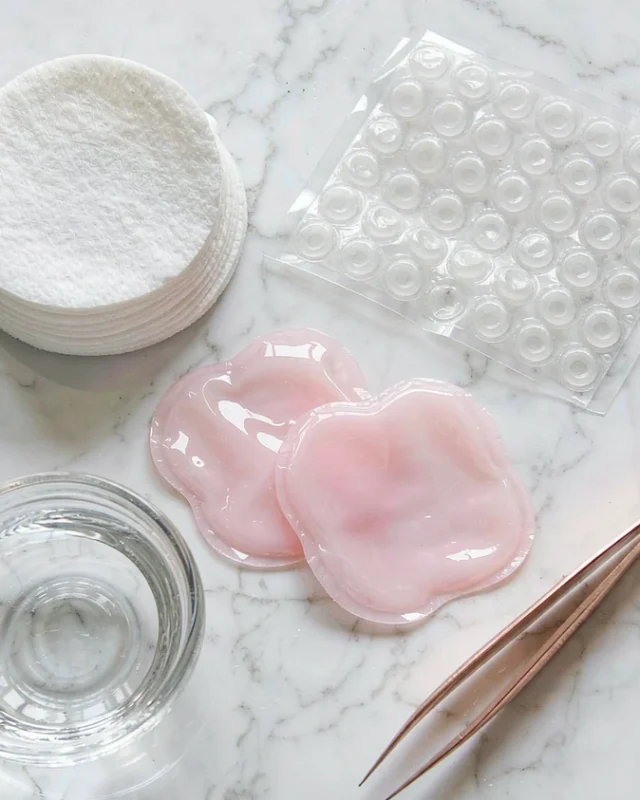
The material sold as bio-collagen is a collagen or collagen-blend film, typically 0.5 to 1.5 mm thick, dried and then re-wetted in the sachet. It is not a woven textile. That matters: a film has no fibre structure, so its wet strength comes from the collagen network, and there is a real limit to how much water it can hold before it tears. The related segment, sometimes called a second-skin or jelly mask, behaves the same way with a slightly different polymer base.
2. Serum load and the sag point
A 0.8 mm collagen film holds 8 to 12 times its dry weight in serum, which sounds generous until the sheet is lifted. Above roughly 15 ml per full-face sheet the material droops at the jaw and nose bridge, and the customer experiences a mask that slides off. We specify the load per cut pattern rather than per sheet, because a small eye patch can carry a much higher load per square centimetre than a full-face piece.
3. Actives: in the sheet or in the serum?
Brands often want the hero active printed on the front and dosed into the film. The film is a poor place for a water-soluble active because most of it migrates into the surrounding serum during storage, leaving a sheet with the claim and a sachet with the molecule. The defensible approach is to put the active in the serum, keep the film’s collagen story as the material claim, and test the sheet and the serum separately for active content at release and at 12 months.
4. Fit, and why it decides reviews
Collagen film is less forgiving than non-woven. It does not stretch, so a cut that is 4 mm short at the chin will not be pulled into place – it will lift and peel. We test a new cut on ten faces across three face-shape groups and photograph the jaw line, the philtrum and the eye holes. If a brand skips this step, the fit complaint arrives in the first fifty reviews and no formulation improvement recovers it.
5. Sachet and sealing
The heavy serum load makes this one of the harder sachets to seal. A four-side seal with a 6 mm band, a fill-level check, and a 48-hour inverted hold test are the minimum controls. For premium retail, an aluminium-laminate sachet with a matte print finish protects the sheet from light and gives a shelf presence a clear film cannot.
6. Stability
- Weight retention at 25 and 40 degrees Celsius, three months, with a 3 percent limit.
- Adhesion test on a standardised substrate after storage.
- Microbial limits per ISO 17516 plus a challenge test on the serum.
- Seal integrity, 48 hours inverted, on every batch sample.
- Active assay at release and 12 months for anything printed on pack.
7. Commercial profile
Stock collagen film, three cut patterns, 18 to 22 ml serum, MOQ 1,000 sachets, 25 to 35 days. A custom film thickness or a printed film adds four to six weeks. The bio-collagen face mask range covers the stocked configurations, and the hydrogel production guide explains the alternative gel route if your formulator proposes a different substrate.