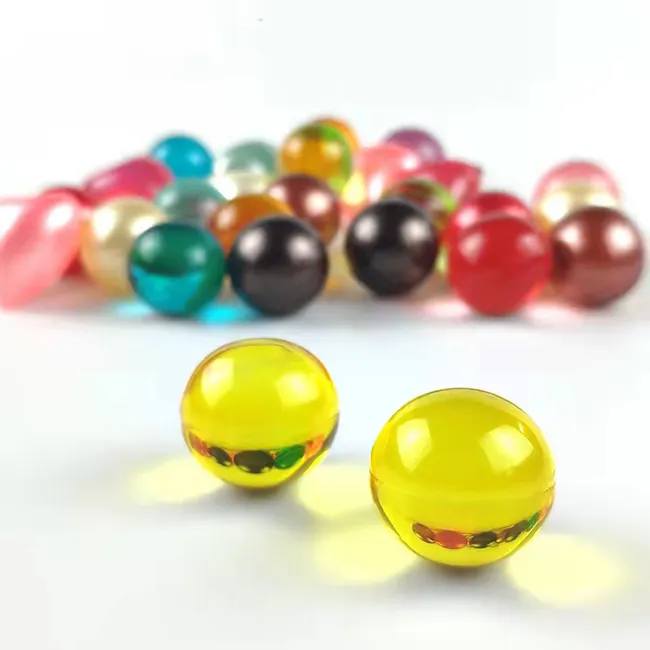
Bath pearl gift jars are the clearest example in cosmetics of packaging costing more than the product inside. The pearls may be a few cents; the jar, the label, the carton and the pick-pack can multiply that by six. Brands that price a gift set from the fill cost alone are surprised in October, when the carton printer has a four-week queue and the freight forwarder has no space.
1. The cost stack, itemised
| Element | Share of unit cost | Where it varies |
|---|---|---|
| Pearls and fill | 12 to 20 percent | Oil blend, pigment, pearl size |
| Jar and closure | 25 to 35 percent | Stock PET versus custom mould |
| Label or print | 10 to 18 percent | Number of colours, foil, spot varnish |
| Carton | 15 to 25 percent | Rigid box versus folding carton |
| Pick-pack and shrink | 8 to 12 percent | Hand assembly, insert count |
| Freight per unit | 5 to 15 percent | Pallet efficiency, destination |
Two brands can quote the same retail price with completely different margin structures because one chose a folding carton and the other a rigid box. Neither is wrong; the mistake is choosing a rigid box in September for a November shipment.
2. Jar choice sets the pearl size
A 200 ml jar holds roughly 120 to 150 pearls at 4 mm, or 60 to 80 at 8 mm. The fill has to leave 10 to 15 percent headspace so the pearls do not crush against the lid in transit. If your design needs a full-looking jar, use a smaller pearl rather than overfilling: pearls under the lid fail a drop test and a retail audit at the same time.
3. Label versus direct print
A pressure-sensitive label on a stock jar is the fastest and cheapest route and it allows small volumes. Direct print on the jar looks better and costs less per unit above roughly 5,000 pieces, but it removes the ability to change copy late and it needs a cylinder screen or a UV digital line. For a first gift season, label the stock jar, invest the difference in the carton, and revisit direct print once the volume is proven.
4. Carton and transit reality
A rigid box adds 1.5 to 2.5 USD per unit at low volume and needs a 6 to 8 week lead time including proofing. A folding carton with a foil block adds 0.3 to 0.6 USD and runs 3 to 4 weeks. Either way, the outer master carton matters more than the design: a gift jar is heavy, and a master carton that fits 12 units per layer on a standard pallet saves more freight than a lighter label stock saves paper.
5. Assembly and quality control
Gift sets drift out of specification during hand assembly, not during filling. Two controls prevent it: a pick-pack checklist photographed at the first unit, and a 100 percent seal check on the jar before it goes into the carton. A pearl jar that leaks oil into the carton is found by the customer, not by the line.
6. A Q4 calendar that works
- June: lock the pearl colour and fragrance, approve the fill sample.
- July: final artwork and dielines, order jars and cartons.
- August: first production run, stability pull at 4 weeks.
- September: assembly and shrink, quality hold-back sample retained.
- October: ship, allowing 30 to 35 days to a European or US distribution centre.
Slipping each step by two weeks is survivable; slipping the carton order by four weeks is not, because printers do not add capacity for a late purchase order. See the gift jar bath pearl sets for stocked configurations, and read how the pearls themselves are made before locking the fill.




