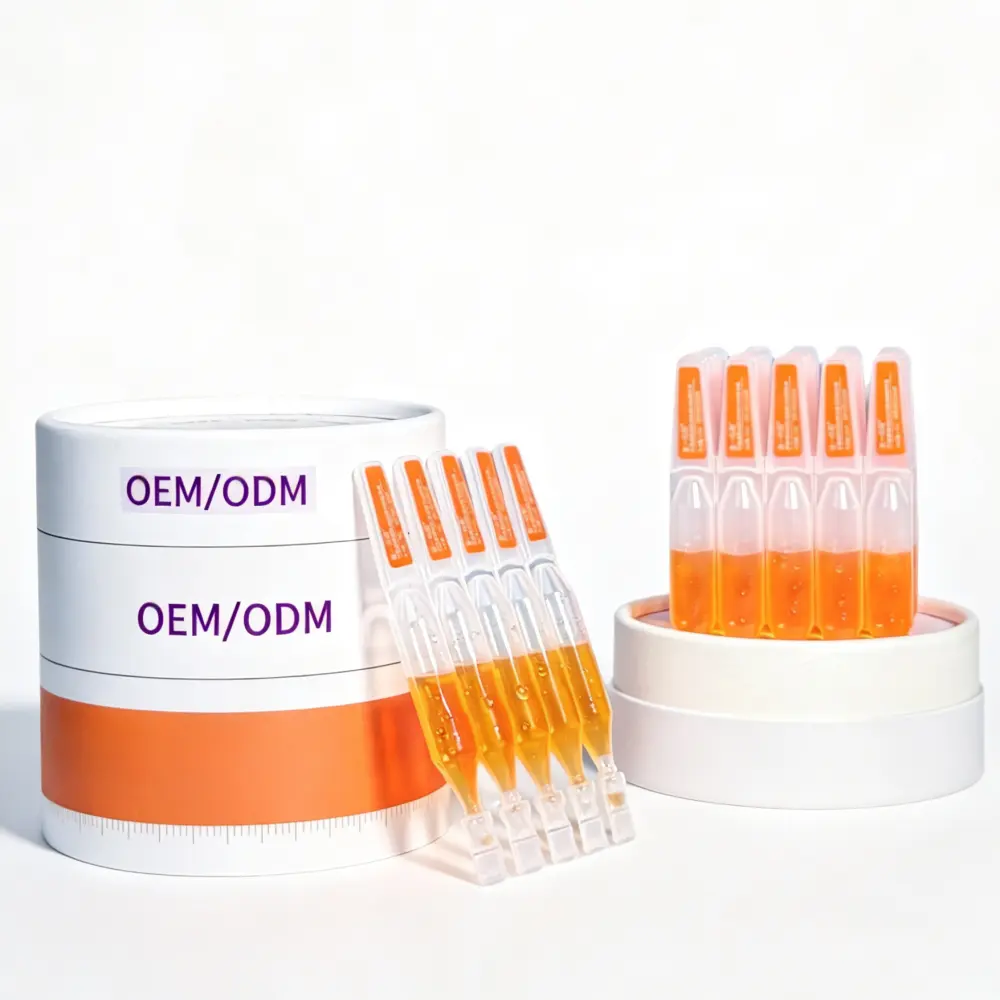
AHA and BHA exfoliating serums look like a simple category – an acid in water – and they produce the highest rate of serious irritation reports in skincare. Two products labelled 10 percent AHA can differ threefold in actual strength, because the label counts total acid while the skin responds to free acid at a given pH.
1. Total acid versus free acid
At pH 3.5 roughly 30 to 50 percent of a glycolic load is present as free acid; at pH 4.5 it is a small fraction. A 10 percent glycolic serum at pH 3.5 is markedly stronger than the same percentage at pH 4.5. A supplier quoting concentration without pH has quoted half the specification, and the missing half is the one that matters.
2. AHA versus BHA
AHAs – glycolic, lactic, mandelic, malic – are water-soluble and act on the surface, which suits texture and tone. Salicylic acid is oil-soluble and penetrates the pore, which suits congestion. Mandelic is the gentlest AHA and the usual choice for sensitive skin; lactic sits in the middle. Most commercial serums blend an AHA with a small BHA to cover both.
3. Concentration by position
| Position | Typical load | pH |
|---|---|---|
| Sensitive, daily | 3 to 5% AHA | 3.8 to 4.2 |
| Standard resurfacing | 8 to 12% AHA | 3.5 to 4.0 |
| Professional strength | 15 to 30% AHA | 3.0 to 3.5 |
| BHA leave-on | 0.5 to 2% | 3.5 to 4.0 |
Above 10 percent free glycolic acid the risk becomes material for home use, and several markets restrict consumer concentrations. A 20 percent serum sold to consumers should expect returns, reviews, and in some markets a regulator’s letter.
4. Buffers and pH stability
An unbuffered acid serum drifts upward as it reacts with the pack, so the product weakens month by month. A citrate or lactate buffer holds the pH within 0.2 units. Measure at release and at every stability pull, and write a specification on it.
5. Sensation, tingling and the burn report
A mild tingling for a minute is normal. A burning sensation that lasts, or redness that persists for hours, is a sign the free acid load or the pH is too aggressive for the intended user. Adding a soothing agent such as panthenol or allantoin reduces the perception without changing the exfoliation, and a small amount of a viscosity modifier slows the application and lowers the peak dose.
6. Testing and instructions
Test pH at release, at 3 months at 40 degrees Celsius and at 12 months ambient. Run a tolerance panel of 30 subjects, and require a patch test instruction and a frequency limit on the pack – two to three times a week for a standard strength, daily only for the sensitive tier. A brand that prints daily use on a 12 percent glycolic serum is writing the complaint itself.
7. Commercial profile
8 percent glycolic with 0.5 percent salicylic at pH 3.8, 30 ml dropper, MOQ 2,000 units, 25 to 35 days. See the serum range and the niacinamide guide for the product that usually follows an exfoliant in a routine.