Key takeaways
- Liquid foundation is an emulsion; its coverage comes from pigment loading and film formers.
- Cushion packs are a liquid in a sponge, which doubles the pack cost and the fill complexity.
- Cream and stick formats suit dry skin and cold markets; liquids suit humid markets.
Foundation is the product where format, shade range and supply chain collide. A liquid is an emulsion with pigment dispersed in the water or oil phase; a cream is a heavier version of the same idea; a stick is an anhydrous solid; a cushion is a liquid inside a sponge inside a compact. Each carries different costs and different risks.
1. Liquid foundation
The base is an emulsion, usually oil-in-water for a lighter feel, with 8 to 15 percent pigment and a film former to set it. Coverage is a function of pigment loading and of the ratio between titanium dioxide and iron oxides. A medium-coverage liquid at 12 percent pigment is the volume product in most markets.
2. Cream foundation
A cream is a water-in-oil emulsion or an anhydrous paste, with higher pigment and a heavier emollient load. It suits dry skin and cold climates, and it photographs well because the surface is slightly reflective. The trade-off is transfer: a cream needs a setting powder or a longer wear test to survive humidity.
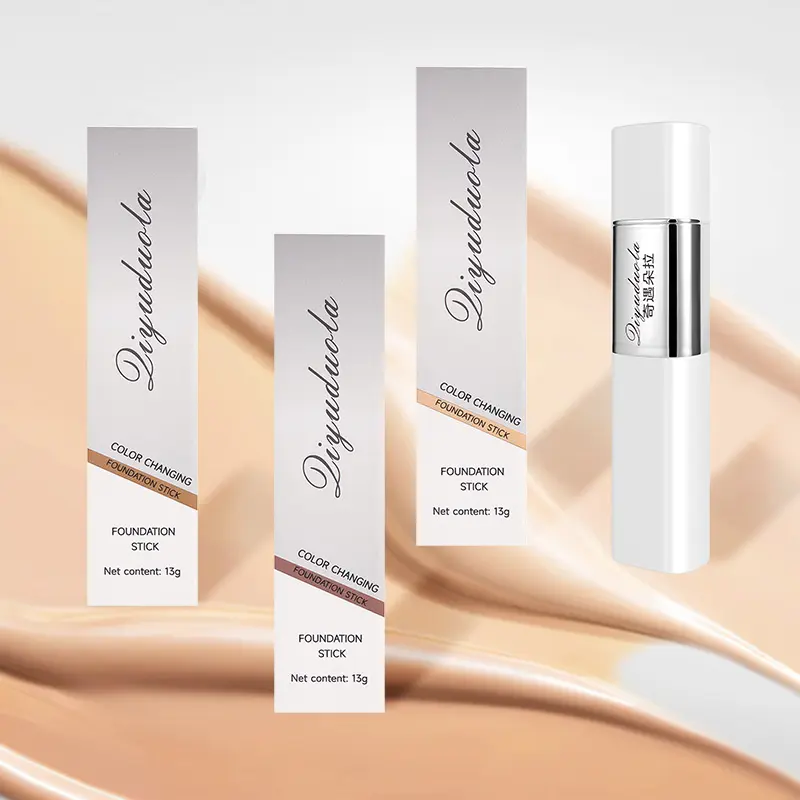
3. Stick foundation
An anhydrous stick with 20 to 25 percent pigment gives full coverage and portability. It is difficult to shade-match at scale because the wax matrix changes how pigment reads, and the shade range usually ends up narrower than a liquid range. Sticks are popular in markets with dry air and in travel retail.
4. Cushion
A cushion compact is a liquid foundation absorbed into a polyurethane sponge, with a puff for application. The pack costs three to five times a bottle, and the fill requires a dedicated line. The advantage is portability and a thin, buildable layer; the disadvantage is that the sponge dries out and the shade range is usually limited to eight to twelve.
5. Shade range economics
Every additional shade multiplies the development, the fill changeover and the inventory. A liquid range of twenty shades is normal in a mature market and expensive at launch; ten shades with a clear undertone system is a realistic first order. Undertone — not depth — is the variable that drives returns.
6. Wear and transfer
Wear is tested on panelists at 22 degrees and 60 percent humidity, and again after four hours. A foundation that transfers onto a collar at hour two will fail in a humid market regardless of its coverage claim. Film formers and a small amount of silicone resin are the usual levers.
7. Oxidation and shade drift
Iron oxide pigments in a water-based emulsion can shift shade over shelf life as the emulsion pH drifts or as the pigment settles unevenly. A foundation approved at release can read a half shade darker at month nine. Holding the pH within a narrow band and checking colour on a spectrophotometer at each stability pull catches the drift before the customer does, and the fix is usually a buffer rather than a new pigment blend.
8. Where it fits
Foundation formats sit in the liquid foundation and BB cream range; pigment behaviour is covered in the pigment dispersion entry.
Reference: Foundation development records and pack cost data, 2025

