Key takeaways
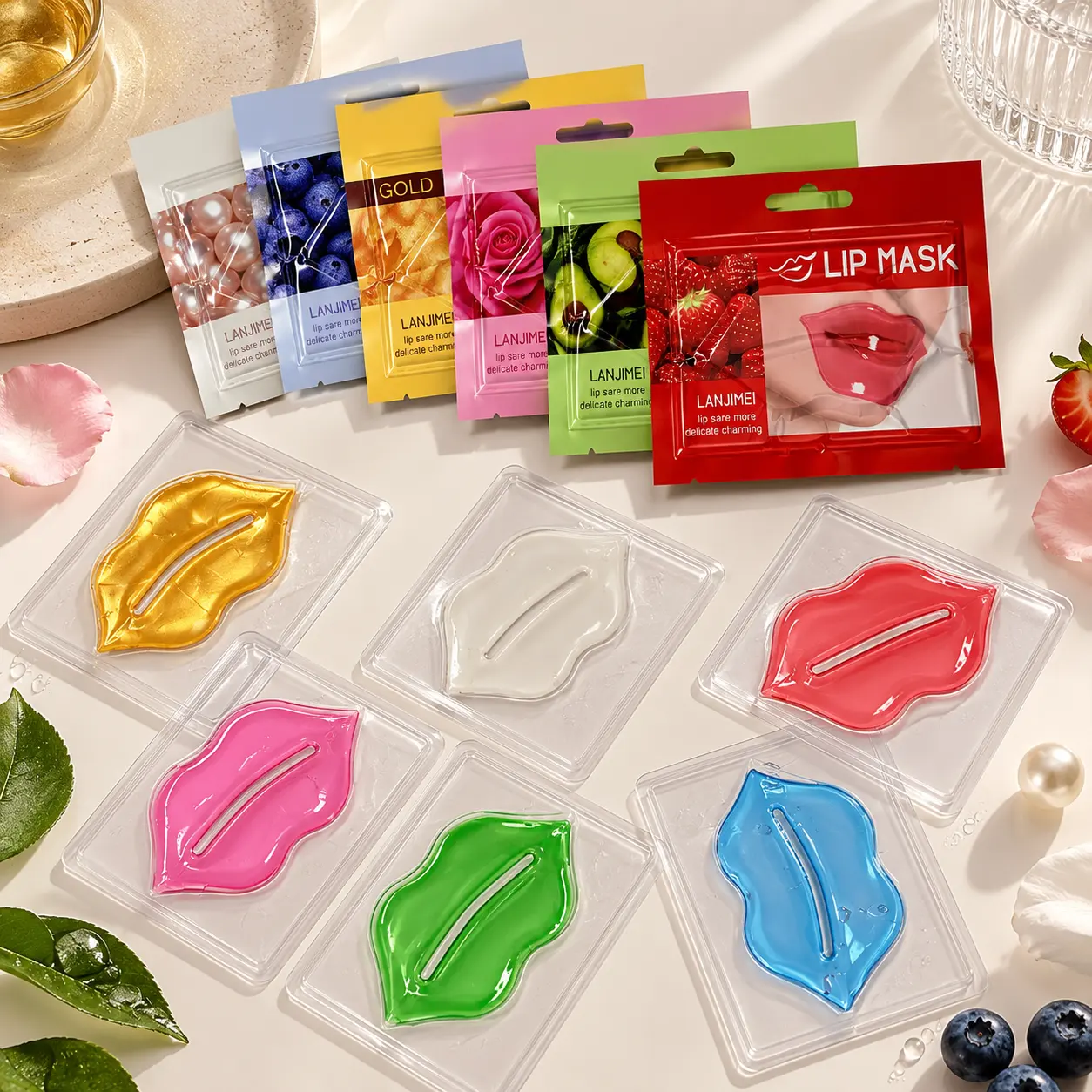
- Hydrogel lip patches conform to the lip contour and stay in place for 20–30 minutes.
- Fabric patches need a heavier serum and often a backing film to stop evaporation.
- Overnight lip masks are usually a thick balm, not a patch, because patches transfer.
A lip patch is a shaped piece of material loaded with serum, applied to the lips for twenty to thirty minutes. The lips are a difficult substrate: they move constantly, they have no sweat glands, and the stratum corneum is thin enough that almost anything applied is felt immediately. That combination decides which materials work.
1. Hydrogel
A hydrogel lip patch is die-cut from a gel sheet and adheres by tack rather than by adhesive. It conforms to the lip contour, stays in place while the wearer talks carefully, and releases its serum over twenty to thirty minutes. Water content of 50 to 60 percent is typical; the die-cut shape must follow the lip line rather than a generic oval.
2. Fabric
A fabric patch is a small nonwoven shape saturated with serum, often with a PE backing film to limit evaporation. It is cheaper than hydrogel and can carry a higher serum load, but it slides on the lip and needs a larger overlap to stay put. Most brands that use fabric add a perforated backing and instruct the wearer to lie down, which is a poor experience.
3. The overnight question
A patch worn overnight transfers to the pillow within an hour. The products sold as overnight lip masks are therefore thick balms or sleeping masks in a tube, not patches. A brand that wants both should treat them as two SKUs rather than one product with two instructions.
4. Serum for the lip
Lip skin tolerates occlusives but reacts to strong humectants. Glycerin above 10 percent produces a stinging sensation on cracked lips. The usual formula is a light gel with hyaluronic acid, panthenol and a small amount of oil, at a pH near 5.5. Flavour is optional and is the most common cause of irritation in the category.
5. Sachet and pairing
Patches are packed as a pair in a single sachet, which halves the packaging per treatment but also means the pair must be used together. A foil sachet with a clear window is the standard; a fully clear sachet shows the product and shortens shelf life under light.
6. Fit across lip shapes
Lip width varies more than face width. A single die cuts a patch that overlaps the mouth corners on a narrow mouth and misses them on a wide one. Two sizes cost little and remove most of the fit complaints; a single size with a generous shape is the compromise most brands take.
7. Stability and leakage
Patches are wet products in a small sachet, which makes the seal the weak point. Hold the pairs at 40 degrees for four weeks, then at 5 degrees, and weigh the sachet at each pull. A patch that loses two grams is a patch that will look dry on the shelf. A sachet that gains weight means the seal is breathing, and the film structure needs a foil layer. Both defects are found at week two rather than at week twelve, so pull early.
8. Where it fits
Lip patches sit in the lip mask range; the occlusive question continues in the lip balm comparison entry.
Reference: Lip patch wear tests and supplier data, 2025

