Skincare gift box OEM projects fail on structure far more often than on design. A beautiful box that arrives with the serum rolling loose and the cream lid lifted produces a refund, a review, and a cost larger than the insert would have been. Structure is the difference between a set that photographs well and a set that survives a parcel network.
1. Box types
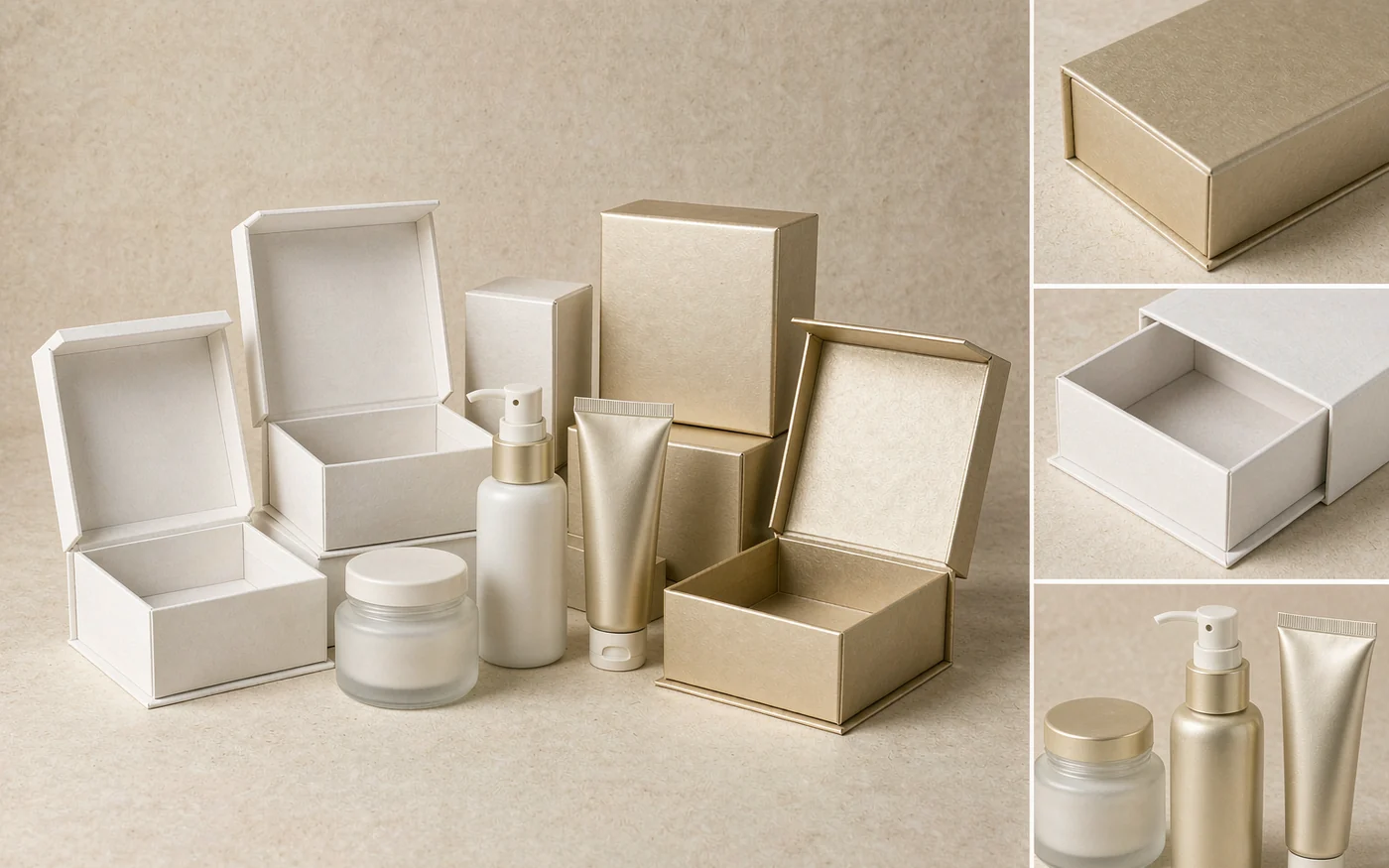
Rigid two-piece box: the premium standard, wrapped lid over a base, highest cost. Folding carton with a printed insert: the mainstream retail format. Drawer box with a ribbon: the gift format, which needs tighter tolerances because the drawer slides. Magnetic book box: the luxury format with a hinge and a catch, the most expensive per unit. A tin is a fourth route for small sets and reads as reusable.
2. The insert does the work
An insert holds each item at a fixed height, stops horizontal movement, and protects the cap from pressure. Moulded pulp is recyclable and has the best cushioning per gram. A PET insert is clearer and shows the product. Die-cut EVA foam is the most protective and the least recyclable. Cavity dimensions should be 2 to 3 mm larger than the item – a loose cavity lets the item move, which is worse than a tight one.
3. Height planning and the shelf line
A gift box is judged on how full it looks. If the tallest item sits 20 mm below the lid, the set reads as empty and the photograph looks cheap. Set the box depth to the tallest item plus the insert wall plus 5 to 8 mm, and stagger the items so that the shortest sits at the front. Padding a box with tissue to fill the gap is visible and reads as cost-cutting.
4. The drop test
Test the assembled set, not the box alone: 1.2 m onto six faces, then a parcel simulation with three drops from 80 cm. Inspect for lid lift, item displacement and cap damage. Most failures come from a cavity that is too loose and from a lid with no compression resistance. A corrugated liner inside a rigid box raises survival rates more than a heavier board does.
5. Assembly and labour
Hand assembly runs 150 to 300 sets per person per day. A ribbon, a tissue wrap, a card and a sticker each add time. Designing for assembly – one insert, no tissue, a printed card in the lid – cuts labour by a third and does not reduce perceived value in a photograph. If the set carries a batch code, plan where it goes before the insert is finalised.
6. Cost structure
In a five-item set the box and insert typically take 30 to 40 percent of the landed cost, the products 40 to 50 percent, and assembly 10 to 15 percent. A magnetic box doubles the packaging share and only works at a higher retail price. Work backwards from the shelf price, not forwards from the components, or the set will be priced above its channel.
7. Commercial profile
Rigid box with a pulp insert, three to five items, MOQ 1,000 sets, 30 to 40 days including assembly. A magnetic box with foil blocking adds three weeks and a tooling charge. See the skincare set range and the travel kit guide for the smaller format.