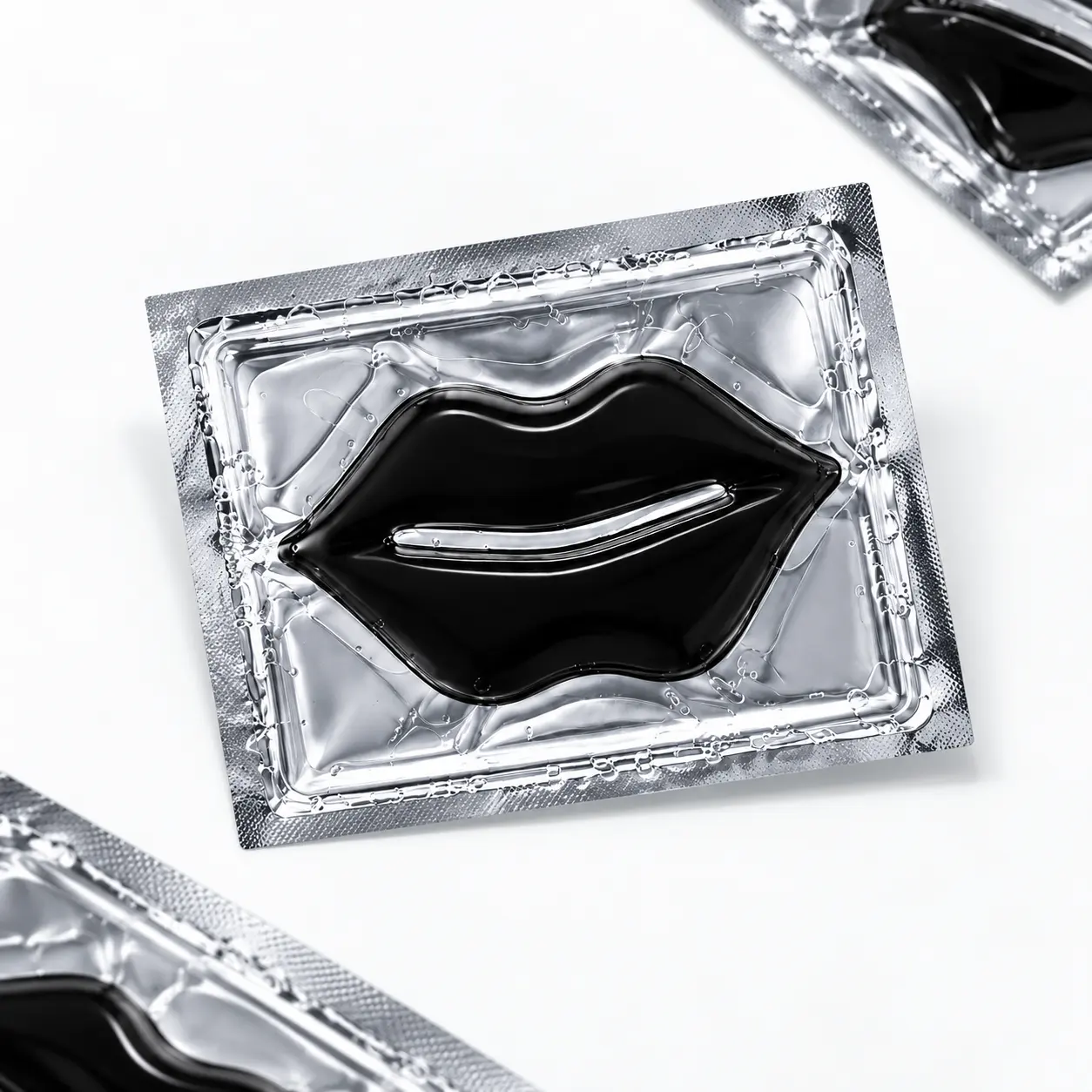
Christmas lip mask sets are the most schedule-sensitive product we run. The selling window is roughly six weeks, the carton printer is booked out by September, and the freight cut-off for a European warehouse falls in early November. A brand that starts in October is not late – it is a year early for the following season. This is the plan we work to with brands that want to ship in the same calendar year.
1. Counts and configurations that sell
Three, five and seven pieces are the counts that work. Three reads as a gift with purchase, five as a stocking filler, seven as a gift set. Advent-calendar formats – 12 or 24 small pieces – are a separate product category with their own tooling and a much longer assembly time. For a first season, a five-piece set with three flavours is the safest configuration: one hero, one seasonal, one neutral.
2. Flavour selection
Seasonal flavours have to be recognisable and stable. Strawberry, cherry and avocado are the perennial sellers; mint and vanilla are the winter pair. A flavour that discolours is a photograph problem and a return problem, so any new flavour needs a three-month colour hold before it goes into a gift set. Spiced flavours are popular in concept and difficult in practice: cinnamon and clove oils are skin irritants at the levels needed for a detectable taste.
3. The carton is the schedule
A rigid box with a foil block takes six to eight weeks including proofing. A folding carton takes three to four. A printed tin takes five to six and has a higher minimum. Every one of these needs artwork approved before the printer’s slot, and the printer will not hold a slot for a late file. Work backwards: production in week 34, carton delivery in week 32, print file approved in week 28, artwork designed in week 24.
4. Assembly and the labour question
A five-piece set is a pick-pack operation: five sachets, one insert card, one carton, one shrink wrap. Hand assembly runs 200 to 400 sets per person per day depending on the pack complexity, and that labour is a real share of the unit cost. A set with a ribbon, a tag and a printed insert is slower than a set with only a carton. Design for assembly speed, not for a mood board.
5. Testing on a seasonal schedule
Seasonal sets use stock formulas, so the stability work is a stock file rather than a new study – which is precisely why stock formulas exist. If the set includes a new flavour or a new shape, add four weeks. Do not commission a new formula in August for a December launch.
6. Forecast and residual stock
Seasonal sets have no second season. Ordering 8,000 when the realistic sell-through is 5,500 leaves 2,500 units to be discounted in January, which damages the brand’s price integrity more than the discount recovers. The practical split is 80 percent of the forecast in the first run and a second run in week 37 if the sell-in is strong. A second run is possible only if the cartons were ordered with a small overage.
7. A calendar that works
- May: concept, flavour selection, count decision.
- June: samples, colour hold started.
- July: artwork, carton and tin orders placed.
- August: gel and serum production, sachet print.
- September: assembly, quality hold-back.
- October: ship, 30 to 35 days to destination.
See the lip mask range for the flavours in stock, and the flavour notes before you commit to a spiced concept.




