Rotary jar eye patches – thirty pairs in a single jar, sold as a two-month supply – are the format that made eye patches a mainstream retail category rather than a spa item. The economics are attractive: the customer buys once and uses for eight weeks, the cost per pair falls as the count rises, and the jar itself carries a premium that a sachet cannot. The risks are equally concentrated: every patch in the jar is exposed to the same air, the same light and the same handling.
1. Why 60 and not 30
Sixty patches means thirty applications, which is roughly one month of daily use or two months of alternate-day use. The count is a marketing decision as much as a manufacturing one: at 60 the price per pair looks low, the jar looks full, and the repurchase cycle fits a two-month replenishment. A 30-patch jar reads as a trial and prices poorly per unit. Below 20 the jar is no longer the value format.
2. Stack design is the whole problem
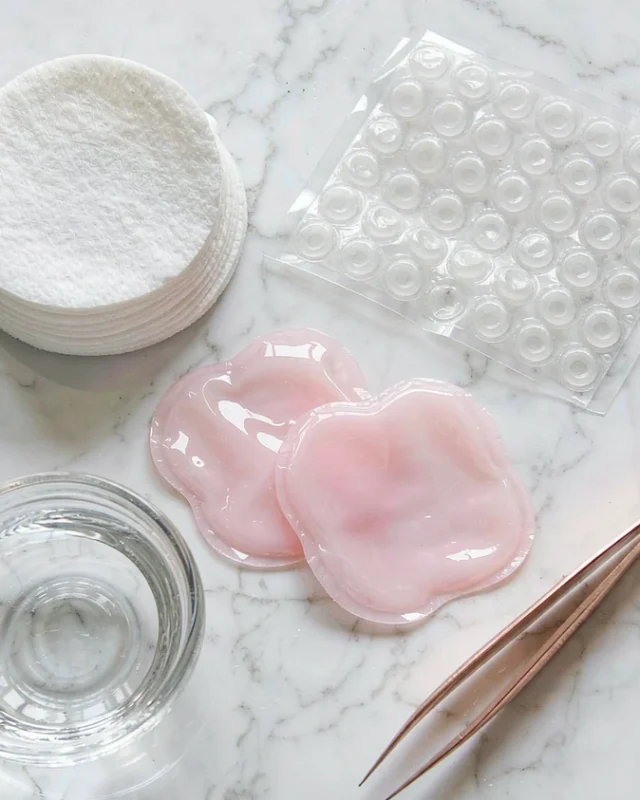
Patches in a jar are stacked with a release liner between them, and the stack has to survive transport without shifting into a wedge. Three controls matter: a stack diameter 2 to 3 mm smaller than the jar’s inner diameter, a foam or paper pad at the top to take up headspace, and a sealing disc under the lid. A jar whose stack shifts produces patches that are folded at the edge, and a folded patch will not adhere.
3. Moisture and the top-of-stack problem
Even in a sealed jar, the top patch loses moisture faster than the bottom one, because the headspace above it is larger and the sealing disc is not a perfect barrier over two years. The practical mitigations: a serum-loaded pad at the top of the stack, a jar with a tight double-seal closure, and a declared shelf life that reflects the top-of-stack condition rather than the average. A brand that tests only the middle patch of a jar is testing a product the customer may never open first.
4. Jar specification
| Element | Practice | Failure if wrong |
|---|---|---|
| Jar body | PET or PP, 60 to 90 mm diameter | Too shallow, patches fold |
| Closure | Screw cap with inner sealing disc | Moisture loss, dried edges |
| Liner | PP film between patches | Patches stick together |
| Top pad | Serum-soaked non-woven disc | Top patch dries first |
| Label | Wrap or spot, with batch code | No traceability |
5. Filling and assembly
The patches are filled into sachets individually or cast and cut into the jar directly, depending on the format. For a jar, the usual route is: cast sheet, cut pairs, stack with liners, insert top pad, seal, label. This is a semi-manual operation, and labour is the cost driver. At 5,000 jars the assembly is a meaningful share of unit cost; at 50,000 it becomes efficient and the jar itself dominates.
6. Retail and channel fit
A 60-patch jar suits pharmacy, beauty retail and e-commerce, where the price per pair can be displayed. It does not suit travel retail, where weight and spill risk matter, or hospitality, where single-use is the expectation. The best-performing brands run the jar as the core SKU and a 5-pair sachet as the trial, with the trial priced to make the jar look like value.
7. Commercial profile
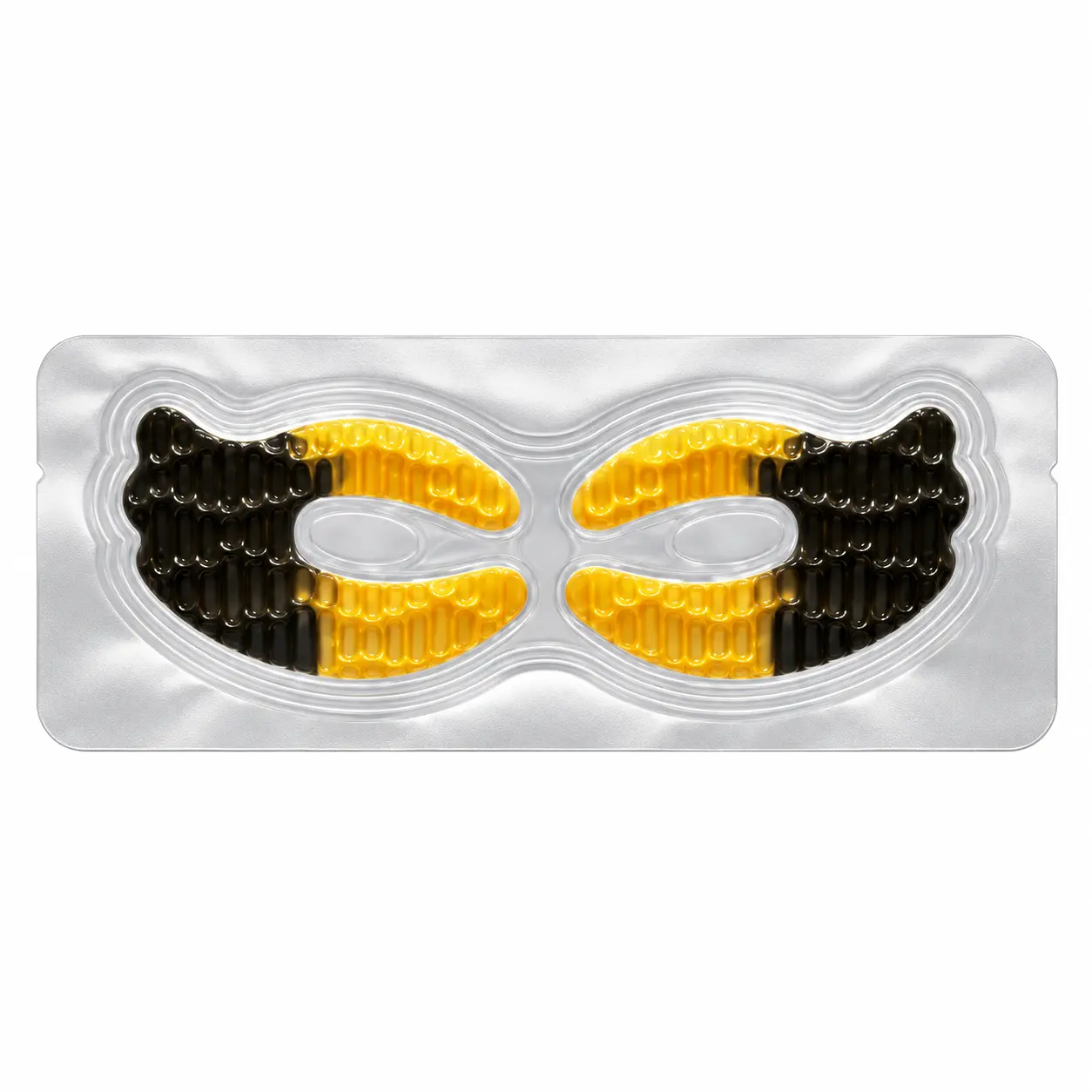
Stock jar, stock leaf die, 60 patches, MOQ 1,000 jars, 30 to 40 days because of the assembly step. A custom jar mould adds eight to twelve weeks. See the eye patch range for jar formats, and the shape guide before you lock the die.