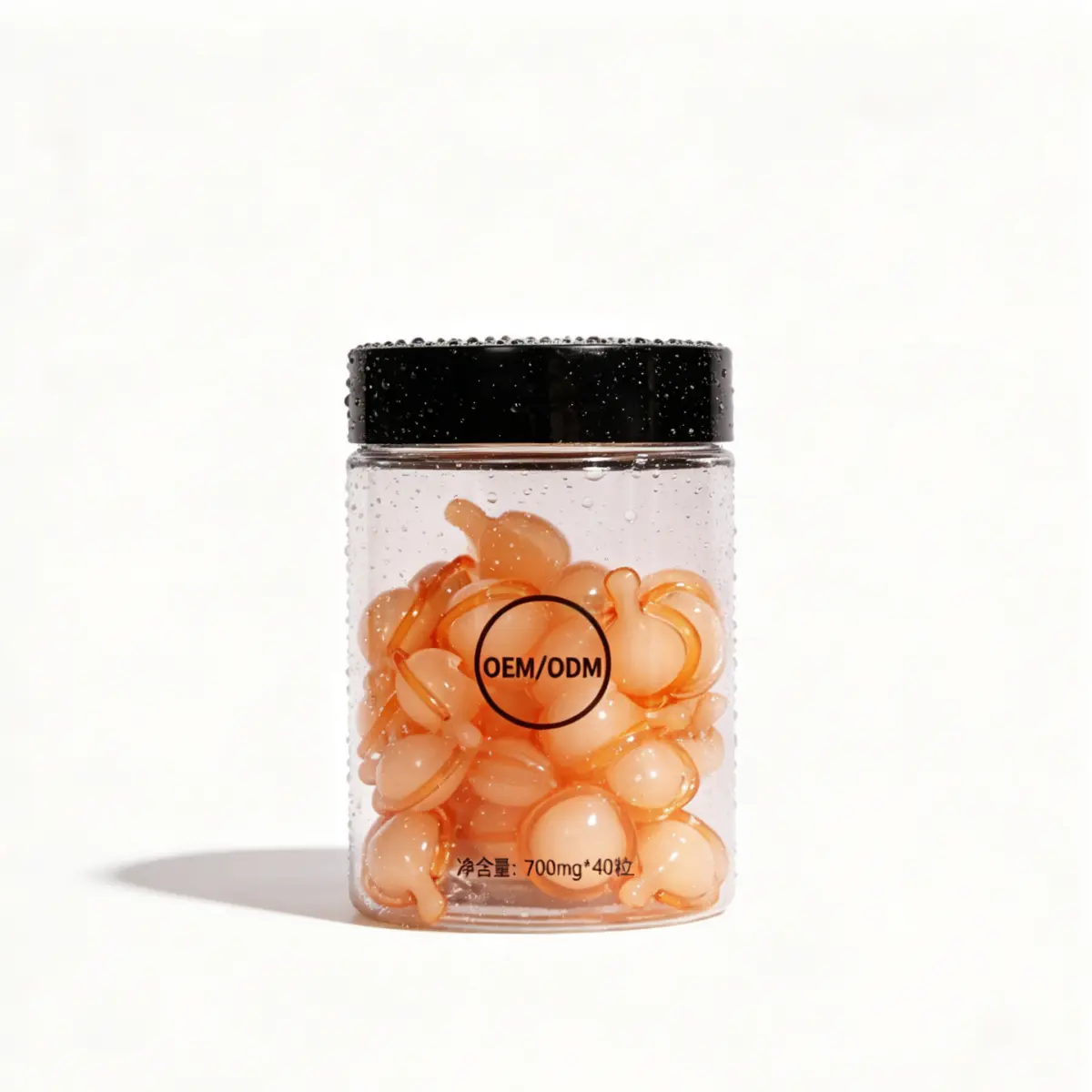
Private label capsule serum is sold to brands as a fast, low-risk entry into single-dose skincare, and that is broadly true – but only if the brand understands which decisions are free and which ones start a clock. The difference between a 500-piece test run in eleven weeks and a 12,000-piece launch in twenty-six weeks is usually three choices made in the first meeting: formula, shell, and packaging.
1. The three decisions that set your cost
Formula: a stock base with your fragrance and colour adjusted is the cheapest path and needs no stability work of its own. A modified stock base – same skeleton, different active level – needs a short verification run. A fully custom base needs a development agreement, three to five iterations and a full stability programme. Shell: stock gelatin or stock HPMC is free; a custom shell colour or a printed bead adds tooling. Packaging: a stock jar with a printed label is days of artwork; a custom mould is eight to twelve weeks and a mould fee.
2. What MOQ is really made of
On capsule filling, MOQ is not driven by the beads. It is driven by the shell run, the bulk batch minimum on the mixing tank, and the jar. A jacketed tank has a practical minimum of 20 to 30 kg of bulk; at 0.5 ml per bead that is tens of thousands of beads, but the beads are the cheap part. The jar usually sets the floor: a stock 30 ml jar is available in low volumes, a custom jar is not. This is why we can hold MOQ from 500 pieces on the stocked formats and why that number jumps when the packaging changes.
3. Timeline, honestly
| Stage | Stock base | Custom base |
|---|---|---|
| Brief to quote | 3 to 5 days | 5 to 7 days |
| Samples | 7 to 10 days | 3 to 4 weeks, 2 to 3 rounds |
| Stability pre-screen | not required | 4 weeks minimum |
| Artwork and proof | 5 to 10 days | 5 to 10 days |
| Production | 25 to 35 days | 30 to 40 days |
| Total, realistic | 8 to 11 weeks | 18 to 26 weeks |
The line that breaks launch plans is artwork. A dieline drawn after the production slot is booked will miss the slot. Approve packaging before the fill date is confirmed, not after.
4. Cost per unit, and where it hides
A 30-bead jar of 0.5 ml beads lands in a band that depends far more on packaging than on formula. Two brands can pay very different prices for the same bead because one uses a stock jar with a label and the other uses a custom mould with a foil-blocked carton. Ask for the quote split into bulk, fill, primary pack, secondary pack, and freight, plus the one-off charges for tooling, artwork and testing. A single blended number cannot be compared with a competitor’s blended number, and brands that try usually discover the difference after paying a deposit.
5. Documents to collect before the first shipment
- Certificate of analysis for the batch, including fill weight and microbial results.
- Certificate of conformity for the packaging and an artwork proof signed by you.
- Safety data sheets for every raw material, held on file.
- GMP certificate (ISO 22716) and the plant registration number for the destination market.
- Stability summary for the base you selected, even when it is a stock formula.
6. The mistakes that cost the most
Approving a sample from a hand-filled laboratory bead rather than a production bead. Buying jars before the fill weight is locked, then finding the bead does not fit the neck. Printing a percentage claim without the end-of-shelf-life assay behind it. Booking a marketing launch before the production slot is confirmed. Each of these is avoidable with a written schedule that runs backwards from the fill date.
If you want the format explained before you brief, start with the capsule manufacturing walkthrough. Stock bases and ready packaging options are listed in the OEM and private label capsule range, and a written quote usually comes back within five working days.




