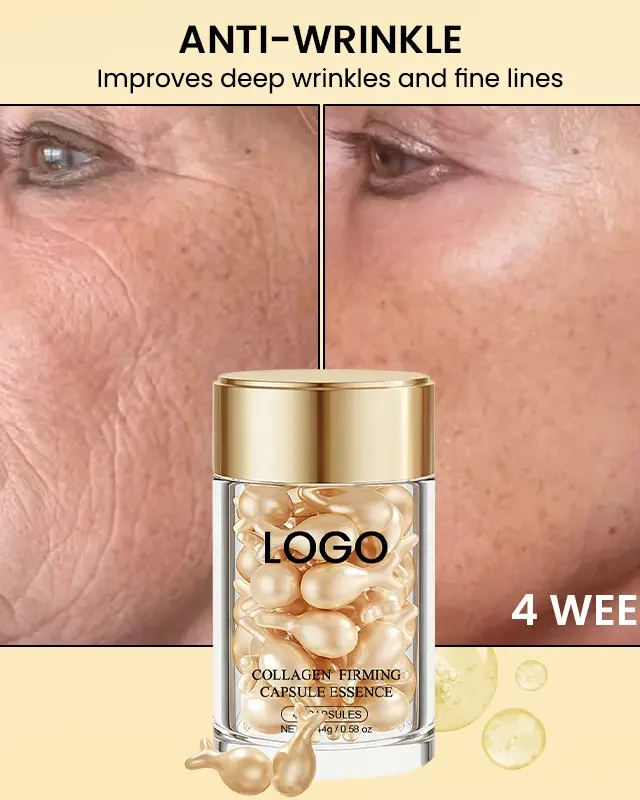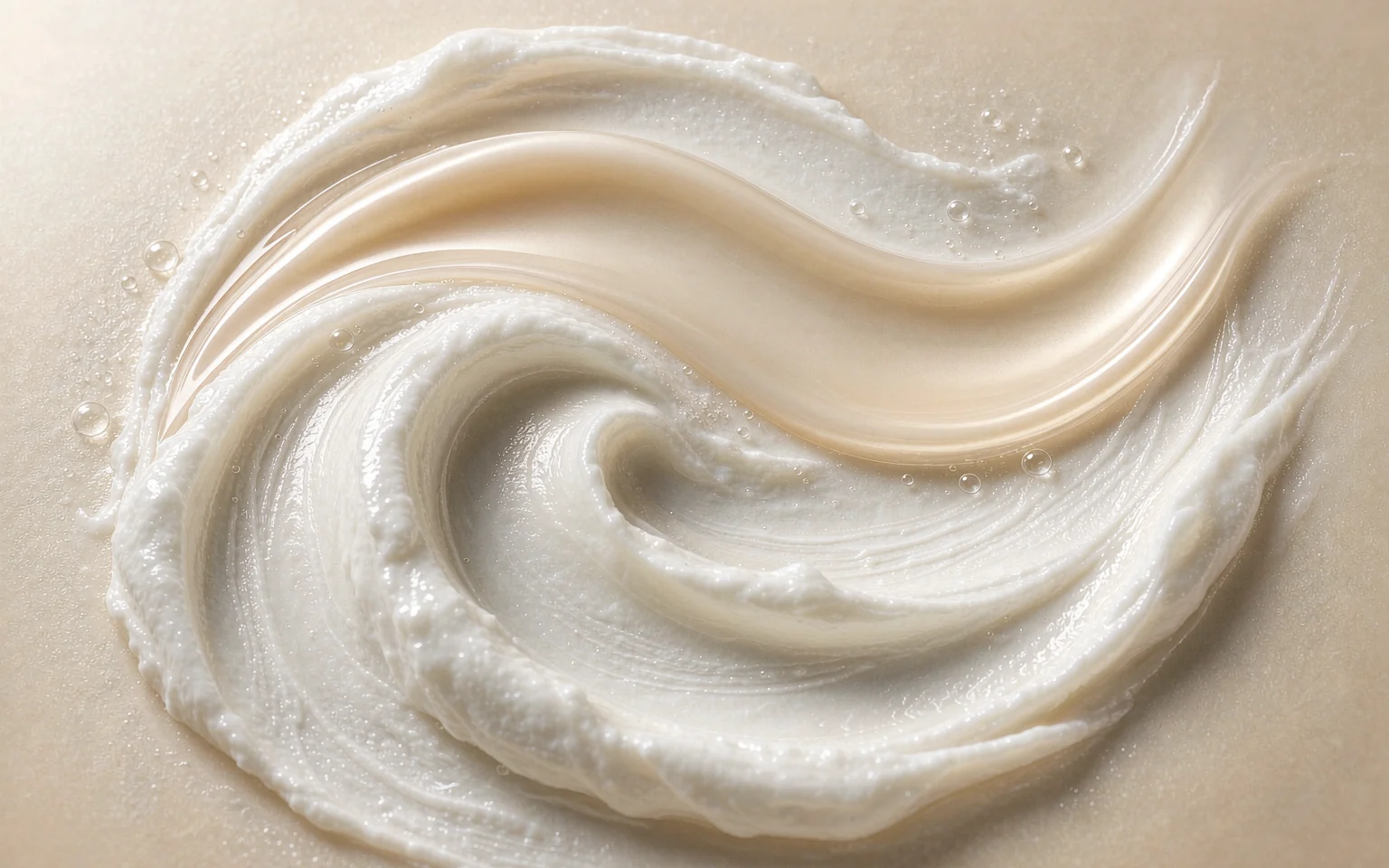
A cream with visible capsules reads as an active dose the buyer can see. The format is quoted from 500 pieces, which makes it attractive for a launch. It also fails in four predictable ways: beads sink, beads crush at the nozzle, beads deform in the jar, and beads leach colour into the base.
1. Two densities in one jar
The capsule shell is usually a soft gel or a calcium-alginate bead; the base is an oil-in-water cream. If the bead is denser than the base it sinks; if lighter, it floats. Matching densities is not practical, so the base is built to hold whatever the bead does, which means a yield value high enough to stop movement at rest.
2. Yield value, not viscosity
A cream can read 40,000 cP on a spindle and still let beads drift, because the spindle measures at a shear rate the bead never experiences. What matters is the stress at which the structure starts to flow. In most cases a base that holds beads needs a yield point well above the weight of a single bead over its footprint.
3. Nozzle size sets the bead ceiling
A piston filler nozzle needs clearance around the bead or it shears the shell. A practical rule is a nozzle bore at least three times the bead diameter, and a fill speed low enough that the bead is carried rather than pushed. A 3 mm bead through a 9 mm bore at moderate speed arrives intact; the same bead through a 6 mm bore arrives dented.
4. Count per jar, then weight
Marketing usually specifies the visual count, for example 60 to 80 visible beads in a 50 g jar. The filler is set on total weight and the count is a consequence of bead size. Changing bead diameter to make them more visible changes the count at the same fill weight, so both numbers have to be agreed before the die is ordered.
5. Bulk handling and settling
Cream and beads are usually combined close to the filler, not in the main tank, because a stirred tank damages shells. A gentle anchor agitator at low speed keeps the blend uniform for the length of a shift. If the blend sits for hours, beads migrate, and the first jars of the next shift look different from the last.
6. Filling temperature
Warm base is thinner and drops beads faster. Filling at the low end of the usable range keeps the structure working while the jar fills. If the base has to be warmed to flow through the nozzle, the yield value is probably too high for the format, not the temperature too low.
7. Shell stability over 36 months
The shell has to survive the water activity of the base. A high-water cream softens a gelatin shell and hardens an alginate one. Accelerated storage at elevated temperature for four to eight weeks usually exposes the problem, and a shell that swells in that window will not look right at month 24.
8. Line check that catches most failures
Cut one jar open every 30 minutes and look at the bead distribution top, middle and bottom. Sinking shows up as a dense layer at the base within the first hour. Crushing shows as wrinkled or crescent-shaped shells. Both are visible before the batch is packed, which is the point of the check.
9. What to specify in the brief
Give bead diameter, visible count per jar, fill weight, base type and target shelf life. Those five values let a formulator pick the shell and the yield value in one pass. A brief that gives only a reference photo usually comes back with a sample that looks right and settles in transit.
10. Where it fits
Capsule creams with a stated 500-piece minimum are listed under cream formats, capsule essence serums and the product catalogue.