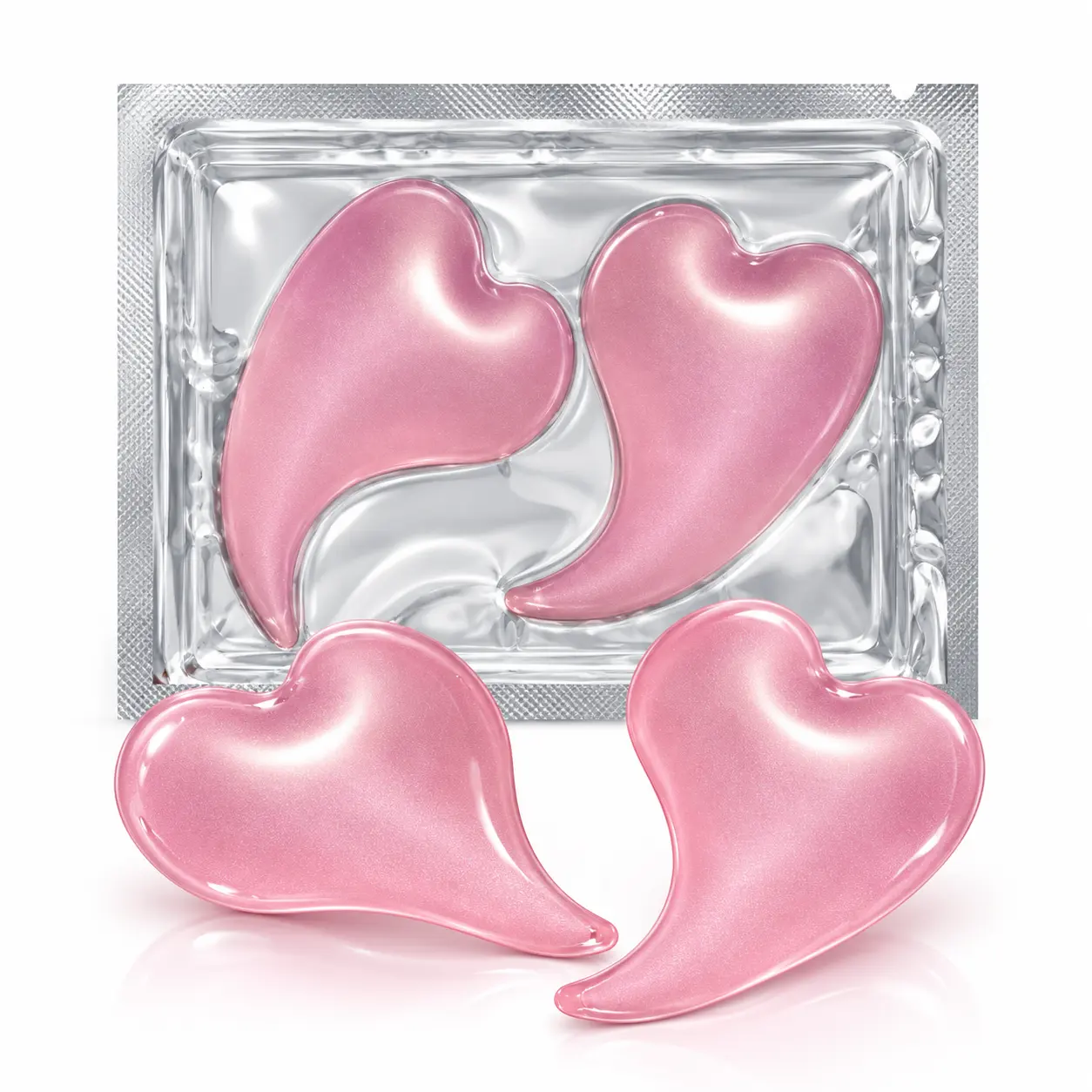
Key takeaways
- A hydrogel patch is a crosslinked polymer matrix, so the serum is inside the material rather than in it.
- Patches hold contact on curved areas that a sheet cannot reach.
- Sheet masks deliver a larger dose; patches deliver longer contact.
A sheet mask and a hydrogel patch are both described as masks, and they work differently. A sheet mask is a passive carrier soaked in serum that transfers to the skin within fifteen to twenty minutes. A hydrogel patch is a crosslinked polymer matrix in which the serum is part of the material itself, so the patch releases slowly for thirty minutes or more.
1. Where the serum lives
In a sheet mask, the serum is in the pouch and the substrate is saturated at filling. In a hydrogel patch, the aqueous phase is bound inside the gel network and the patch is cut from a sheet. This is why a patch does not drip, does not slide, and can be worn while moving.
2. Contact on curved surfaces
Under-eye area, nasolabial folds and the jawline are curved in two directions. A woven sheet bridges those curves and loses contact; a gel patch conforms because it is soft and slightly tacky. That conformity is the main reason the patch format dominates eye and smile-line products.
3. Dose versus duration
A sheet mask carries 20 to 25 grams of serum but most of it stays in the pouch. A pair of eye patches carries 1 to 2 grams and delivers a far higher proportion of it, because the gel is in continuous contact. If the claim is hydration over time, the patch wins; if the claim is a visible soak, the sheet wins.
4. Water content and wear time
Hydrogel water content typically runs 40 to 70 percent. Above 60 percent the patch is comfortable but fragile and dries within twenty minutes in a dry room; below 45 percent it holds shape and needs a longer wear time to release the same dose. Most commercial eye patches sit at 50 to 55 percent.
5. Cost per treatment
Per gram of serum delivered, a patch costs more: the gel sheet, the die-cutting waste and the paired sachet all add up. Per treatment, the two are closer than they look, because a mask is used once and a patch pair is used once. The decision is usually about ritual and target area rather than about unit cost.
6. Choosing between them
- Full-face hydration with a visible soak: sheet mask.
- Targeted area, long wear, movement tolerated: hydrogel patch.
- Cooling or de-puffing claim: patch, because the gel holds temperature longer.
- Lowest cost per unit at high volume: sheet mask.
7. Heat, cold and the format
Gel patches are sensitive to heat in a way sheets are not. Above 35 degrees the network softens, the patch sags and the serum begins to separate; in a cold chain the gel stiffens and loses tack. A patch designed for export to a hot market should be tested at 40 degrees for a month in the pouch, and the wear test repeated afterwards, because a patch that passes stability can still fail comfort.
8. Where it fits
Patches live in the eye patch range; the material question is covered in the hydrogel chemistry entry.
Reference: Hydrogel supplier specifications and wear-test notes, 2025

