Key takeaways
- Hand masks are occlusive gloves with a serum lining; the effect is hydration, not exfoliation.
- Foot peels use an AHA blend and work over 5–10 days by shedding the stratum corneum.
- Both formats are judged on fit, leakage and how the wearer spends the dwell time.
Hand masks and foot masks sit on the same shelf and are described in the same vocabulary, and they work by opposite mechanisms. A hand mask is an occlusive glove with a serum lining that softens the stratum corneum by holding water against it for twenty minutes. A foot peel is an acid treatment that dissolves the corneocytes over a week and makes the skin shed. Neither does what the other does.
The packaging looks similar — a pair of plastic boots or gloves, a sachet, a step-by-step instruction — which is why buyers often ask for one factory to quote both. They should be treated as separate products with separate stability, separate testing and separate claim structures.
1. Hand masks: occlusion and softening
A hand mask is a PE or fabric glove with 12 to 20 ml of serum, worn for fifteen to twenty minutes. The serum is typically a humectant gel with glycerin, panthenol and a small amount of oil. The glove prevents evaporation, so the water in the serum is forced into the upper layers of the skin. That is the whole mechanism, and it is effective.
2. Foot peels: acid and time
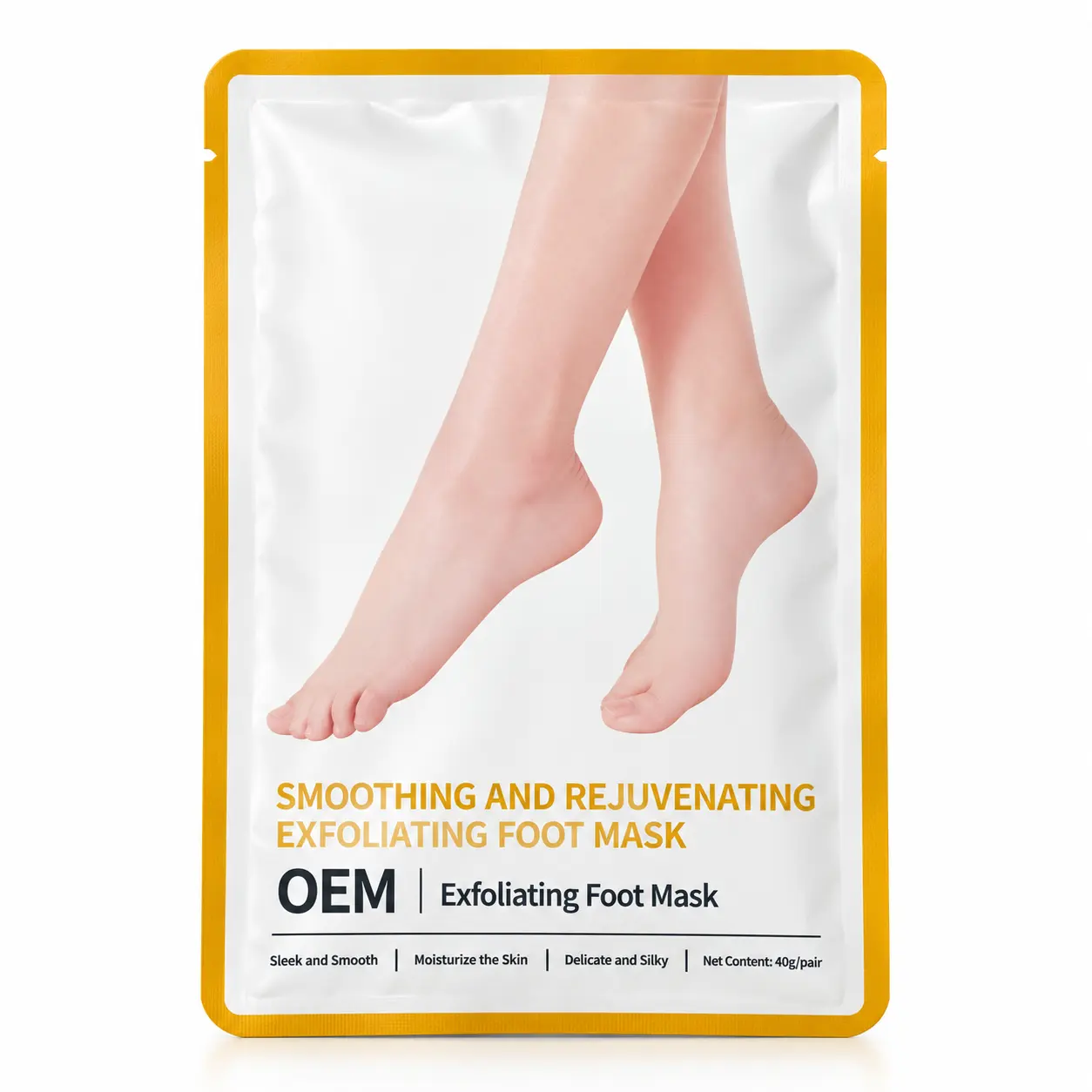
A foot peel is a boot with a lactic or glycolic acid blend at pH 3.5 to 4, worn for sixty to ninety minutes. The acid loosens the bonds between corneocytes, and the skin begins to shed five to ten days later. The effect is dramatic and photographable, which is why the format travels well on social media, and it is also the reason the instruction must be unambiguous about duration.
3. Fit and leakage
A glove that is too large slips off; one that is too small tears at the thumb. A boot that does not reach the ankle lets the acid sit unevenly and produces a visible line. The two sizes per SKU cost little and remove most fit complaints. Leakage at the cuff is the other recurring defect and is solved by a double seal rather than by more serum.
4. The dwell time problem
Twenty minutes with hands immobilised is tolerable; ninety minutes with feet immobilised is a commitment. Products that sell well usually design the ritual around the dwell time — a plastic boot worn with socks while watching television. A shorter dwell means a weaker peel, so the honest route is to design the experience rather than to shorten the acid contact.
5. Testing
A hand mask needs a hydration measurement, a patch test and a leakage test on ten pairs. A foot peel needs a clinical-style shedding assessment with photographs at day three, seven and fourteen, plus an irritation check. The foot product is a mild chemical peel and should be tested like one, not like a moisturiser.
6. Claims and warnings
Hand masks can claim hydration and softness with instrument data. Foot peels are usually described as exfoliating, and the warnings matter: not for damaged skin, not for diabetics without advice, not for use with other acids. A peel sold with insufficient warnings generates a small number of adverse events and a large number of one-star reviews.
7. Sachet and shelf life
Both formats are wet products in a sealed sachet with a plastic boot, and both are sensitive to seal quality. A four-layer film with a foil layer keeps the serum stable for eighteen months; a clear film looks better and loses water. Weigh the sachet at release and at each stability pull, because a two gram loss is the first sign that the seal is failing.
8. Where it fits
Hand formats sit in the hand mask range and foot formats in the foot mask range; the acid question continues in the acid comparison entry.
Reference: Hand and foot care development notes, 2025

