Key takeaways
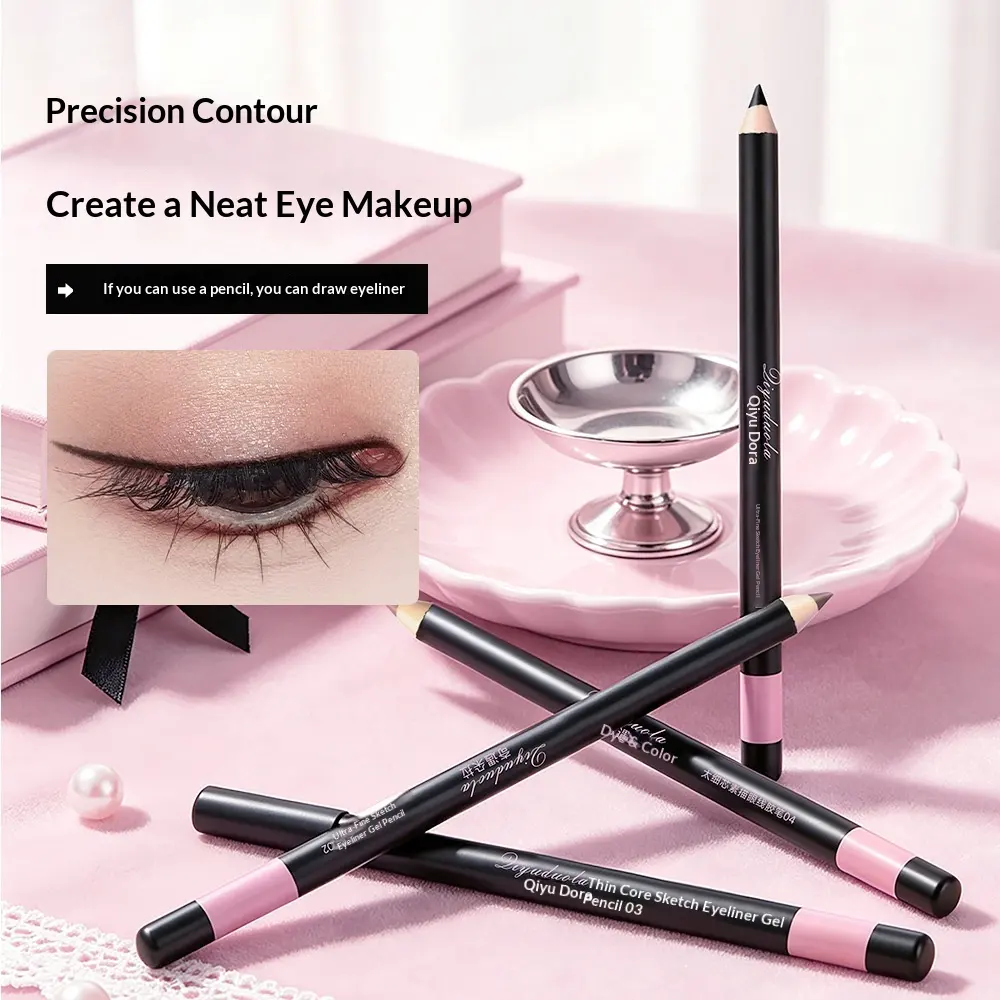
- Pencil liners are wax-based and smudge by design; wear is a function of wax melting point.
- Gel liners combine wax and a volatile solvent for a soft edge with better hold.
- Liquid liners use a film former and pigment; precision comes from the applicator tip.
Eyeliner is a small category with three distinct chemistries, and the choice is made on the line the customer wants to draw rather than on wear alone. A pencil gives a soft edge that can be blended; a gel gives a soft edge that sets; a liquid gives a sharp edge that does not move. Each has a different failure mode and a different test.
1. Pencil chemistry
A pencil is a wax matrix — typically 25 to 40 percent wax with oils and pigment — that deposits by friction. The wax melting point decides the wear: a low-melting pencil smudges within hours, a high-melting one drags on the lid. Sharpening, whether by a sharpener or a self-sharpening mechanism, is a packaging decision that changes the customer’s routine.
2. Gel liners
A gel liner combines wax with a volatile solvent and a film former, so it applies with the softness of a pencil and sets to a smudge-resistant film. The pot format needs a brush; the pen format uses a felt or brush tip. Once the solvent evaporates the liner is difficult to remove without an oil-based remover, which should be stated on the pack.
3. Liquid liners
A liquid liner is a pigment dispersion in water or solvent with a film former. Precision comes from the applicator: a fine brush tip for a thin line, a felt tip for a consistent stroke, a stamp for a wing. The formula must dry fast enough not to transfer to the lid crease but slowly enough to correct a mistake.
4. Water, tears and humidity
Wear at the eye is dominated by tears and by the oil of the lid. A water-resistant liner needs a water-insoluble film former; a truly waterproof liner needs a solvent base and a dedicated remover. Claims of waterproof should be tested with a immersion test rather than a humid-room test, because the two are not the same thing.
5. Pigment and safety at the eye
Eye products face stricter pigment rules than lip or face products, and some colours permitted elsewhere are restricted near the eye. The formulator must check the permitted list for the destination market before choosing a shade, and the batch record should name the pigment grade. This is the single most common cause of a product being refused at notification.
6. Application and packaging
A pencil needs a sharpener or a self-sharpening sleeve; a pen needs a tip that does not dry out; a pot needs a brush that does not splay. Each of these is a pack component with a real cost and a real failure mode. A pen whose tip dries after two weeks generates more returns than a formula that smudges.
7. Removal
Removal is part of the wear promise. A long-wear liner that requires a dedicated remover is acceptable if the pack says so, and unacceptable if the customer discovers it at 11 p.m. Test removal with the cleanser the brand actually sells, and state the expectation in one line on the pack.
8. Where it fits
Liners sit in the eyeliner range; the film chemistry connects to the film formers entry.
Reference: Eyeliner development and wear panel data, 2025

