Key takeaways
- A bath pearl carries oil, not detergent: it conditions the water and the skin but does not clean.
- Water-free formulation removes the preservative question and adds a melting-point question in its place.
- Melting point is set between 36 and 40 °C so the pearl dissolves in a warm bath but survives a warm warehouse.
- Colour migration and fragrance stability, not microbial counts, are the usual failure modes in this format.
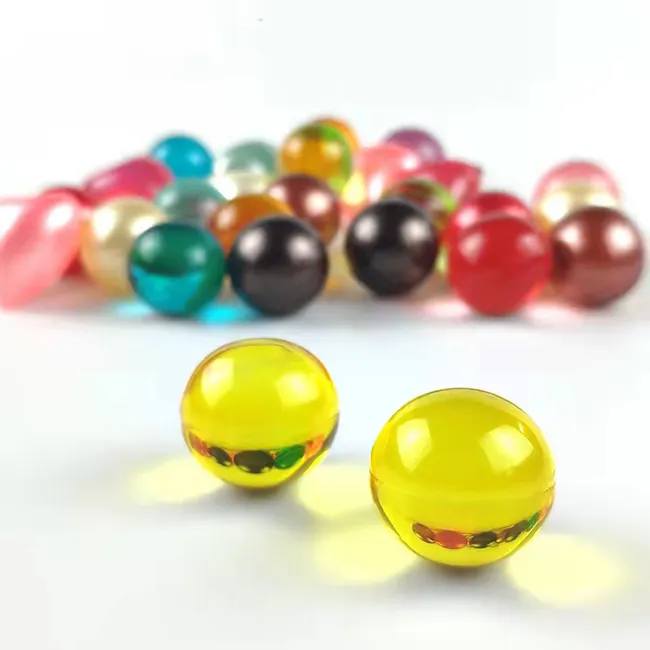
The pearl that will not melt is the failure this format is built around. A bath pearl looks like a sweet and behaves like a slow-release oil dose: a solid ball that has to disappear in water at 38 °C, release its oil into the bath, and leave a film on skin that is still there when the bather gets out. Everything else — colour, fragrance, the shape of the ball — is decoration on top of that single physical event.
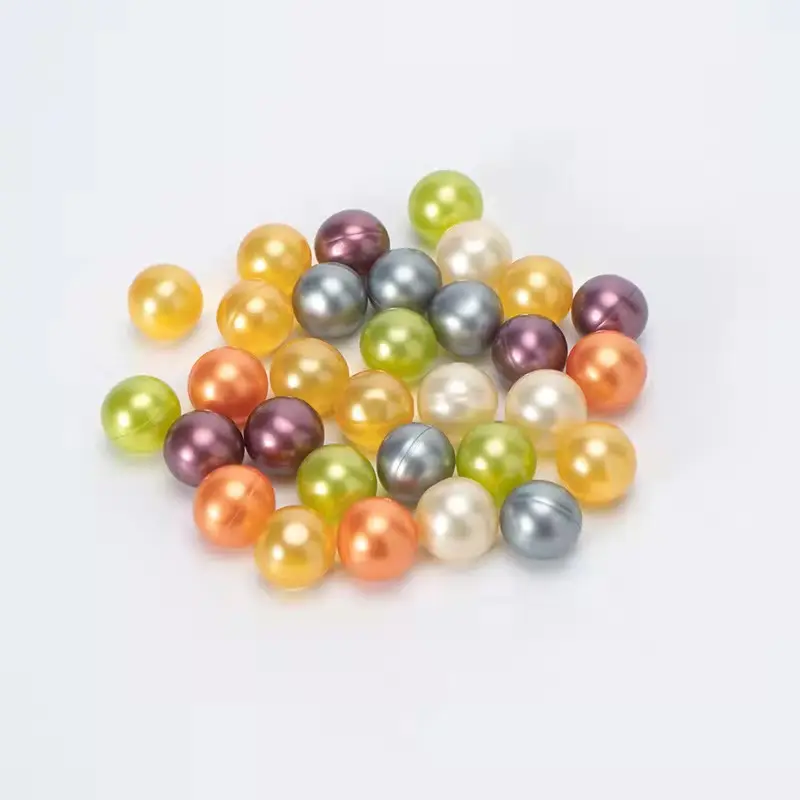
The worked example is our colourful round bath oil pearl, which starts at 200 pieces — low enough that a first run is a test of the concept rather than a commitment to a container of stock.
The boundary, stated plainly
A bath pearl is not a bath product in the cleansing sense. It contains no surfactant, so it does not remove oil, sweat or sunscreen; it adds oil to water that already contains a dispersant from the bath foam, or it sits on the surface as droplets if the water has none. That is the first honest limit: a pearl conditions, it does not clean. Used alone in a clean bath it leaves skin softer; used instead of a body wash it leaves skin unwashed.
The second limit is the oil load. A pearl that is 90 percent oil melts into a visible film on the water and can feel greasy on exit; one at 50 percent is pleasant in the bath and does nothing afterwards. Most commercial pearls sit between 60 and 80 percent oil, with the remainder a structuring wax and a shell or coating that controls when the ball lets go.
Water-free means no preservative, and a new set of problems
Because there is no water in the formula, there is nothing for bacteria to grow in, and the preservative question disappears from the brief entirely. What replaces it is oxidation. Every oil in the pearl is a candidate for rancidity, and the fragrance is the first thing to change: a citrus accord in an oil matrix can turn waxy in months at 30 °C. That is why the format is tested for peroxide value and odour against a retained standard rather than for microbial counts alone.
The number that decides everything: melting point
The melting range is set by the temperature of a bath, not by the temperature of a laboratory. A pearl that melts at 32 °C arrives soft and sticky in a warm warehouse in July; one that melts at 44 °C survives the warehouse and floats around the bather’s feet like a marble. The working window is 36 to 40 °C, measured on the finished ball rather than on the oil blend, because the shell or coating shifts the effective melting point by several degrees.
Measurement is by differential scanning calorimetry on the blend and by a practical drop test on the finished pearl: a ball dropped into water held at 38 °C should be gone within a defined time, and the time is written into the specification rather than left to the bather’s patience.
Four tests before a batch ships
| Test | Method | What it catches |
|---|---|---|
| Melting behaviour | Drop test at 38 °C plus DSC on the blend | A pearl that will not dissolve, or dissolves before the bath is run |
| Colour migration | Pearls stored in contact with the pack, checked at intervals | Dye bleeding into the jar, or into a neighbouring shade in a mixed pack |
| Fragrance stability | Odour panel against a retained standard at 40 °C | The accord turning waxy or losing its top notes |
| Pack integrity | Leak and deformation check after 40 °C storage | Oil creep through a foil pouch seam or a jar thread |
Microbiology is still run, but as a check on the process rather than on the formula: a water-free product should read low, and a high count means water entered the batch somewhere it should not have.
Claims, fragrance and the wording trap
Fragrance is the most regulated input in this format. An IFRA certificate is issued for every accord we run, and a customer’s own oil house has to supply one before the blend is fixed. Fragrance-free is a legitimate option and does not need the certificate; “natural fragrance” does, because the allergen declaration still applies.
The wording trap is the SKU name. Pearls are sold under search terms that stretch well past the bath — the same ball appears in listings for personal care and massage formats — and a claim that follows the keyword rather than the product is a compliance problem in the EU and in ASEAN. In our regulatory review, the pearl claim set is limited to bathing, skin conditioning and sensory experience, and anything beyond that is sent back to the brand to defend.
What the format can be customised into
Shape, colour, fragrance and oil blend are all live variables, and the bath pearl range carries single-shade, mixed-shade and gift-jar formats, with aroma pearls as the fragrance-led variant. Packaging runs from a jar or bottle to a tube, sachet or foil pouch, all with artwork and dieline supplied to the brief.
The published terms are 200 pieces at the first tier, then 1,000 to 2,999, 3,000 to 49,999 and 50,000+, 25 to 35 days after sign-off, 36 months unopened and 12 months after opening, COA and stability file per batch from an ISO 22716 and GMPC facility, shipping from Guangzhou Nansha or Shenzhen Shekou.
The test sequence above is the same logic any cosmetic batch runs, and the full release sequence is worth reading before a first order, because a pearl batch fails on melting or on colour long before it fails on anything a marketing deck mentions.
If the brief is a bath ritual rather than a bath cleanser, the format works. If the brief is “clean and moisturise in one step”, it does not — and no amount of pearl colour will fix that. Send the oil load and the melting window and the sample comes back with both stated.
Reference: SAIMEIYA bath pearl line, ISO 22716 / GMPC batch records