Key takeaways
- A hydrogel is 60 to 80 percent water held in a gelling matrix — the water is the product.
- Occlusion and evaporative cooling do most of the visible work in the first 20 minutes.
- Actives that suit a patch act within the wear time: humectants, peptides, caffeine, soothing botanicals.
- Gel strength, water activity and seal integrity decide whether a batch ships.
A sheet mask is a cloth that carries serum. A hydrogel patch is a solid gel that carries water, actives and a shape. The difference is not cosmetic. It decides how the product feels, how long it can sit on skin, what it can claim, and which quality checks matter.
What the matrix is made of
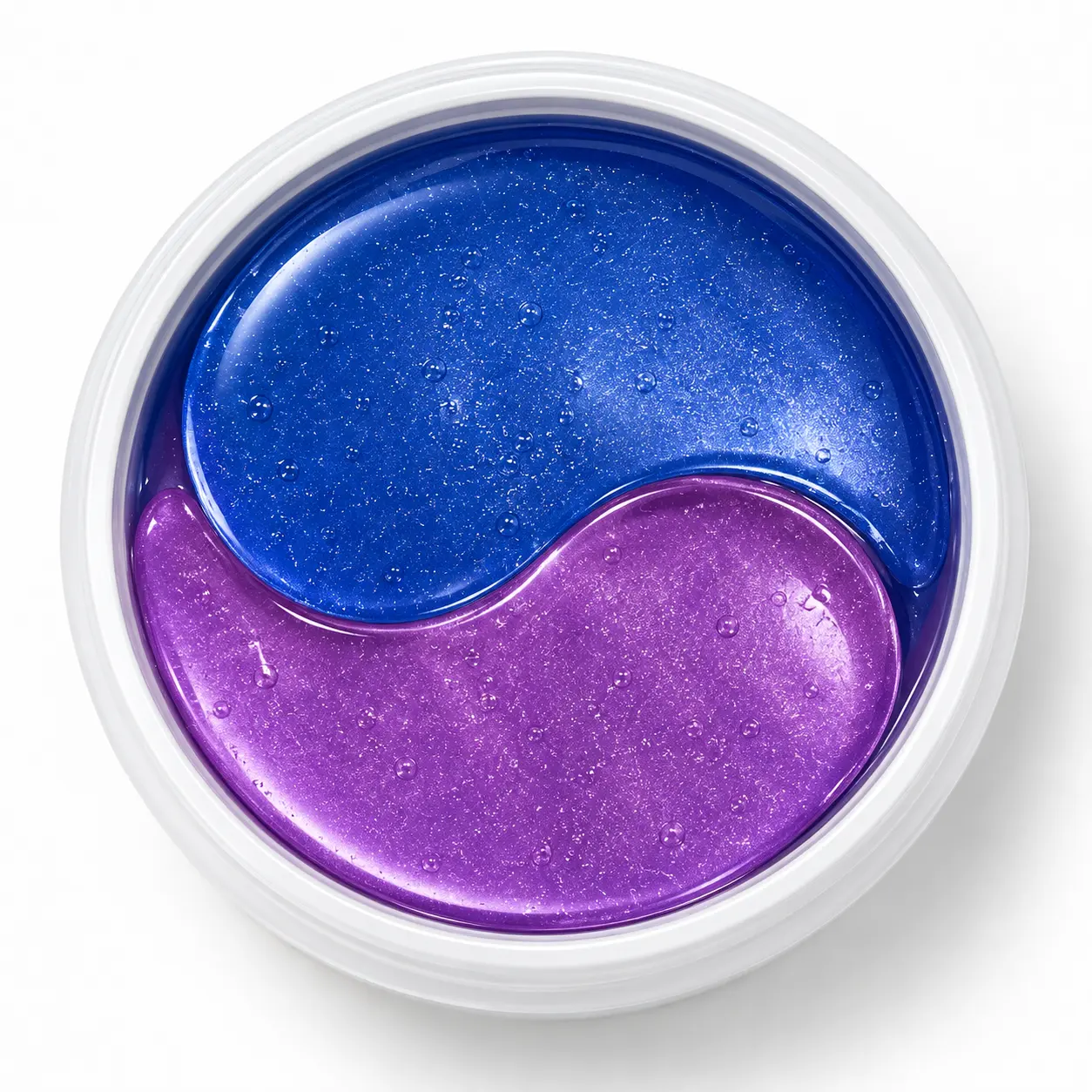
A cosmetic hydrogel is a water-based gel held together by a gelling system, usually one of three kinds:
- Polysaccharide gels — carrageenan, agar, cellulose gum. Cheap, easy to set, but brittle if the water content is too high.
- Gelatin gels — elastic, tolerant of high glycerin loads, and the reason many patches feel slightly rubbery.
- Synthetic gels — polyacrylates and PVP systems. Crisper, clearer, more expensive, and better for a transparent look.
Glycerin sits in all three at 5 to 20 percent. It is both a humectant and an anti-drying agent: a patch that loses its water in the pouch becomes a stiff film, and glycerin is what buys the shelf life.
Efficacy comes from three mechanisms, in this order
Occlusion. A 1.5 to 2 mm gel layer reduces transepidermal water loss in the area beneath it. The stratum corneum hydrates, plumps and looks smoother. This happens whether or not the formula contains an active, and it is the honest core of most patch results.
Cooling. Evaporating water takes latent heat from the skin. A patch worn 15 minutes produces a measurable surface temperature drop, which is why depuffing claims are usually attached to a patch rather than a cream — the mechanism is physical and repeatable.
Sustained release. Actives dissolved in the gel move into the hydrated stratum corneum by concentration gradient over the wear time. The gel acts as a reservoir, so delivery is slower and flatter than a serum — which suits small molecules and short-term visible effects.
Which actives belong in a patch
| Active | Reasonable expectation in 15–20 min | Note |
|---|---|---|
| Hyaluronic acid, glycerin, betaine | Immediate hydration and plumping | The most defensible claim in the category |
| Peptides | Modest, cumulative | Small enough to move; claim should be about appearance over weeks |
| Caffeine | Temporary reduction in puffiness | Partly vascular, partly the cooling effect |
| Chamomile, centella, allantoin | Visible soothing of redness | Works within the wear time |
| Collagen hydrolysate | Film-forming, humectant | Does not rebuild dermis — write the claim carefully |
| Retinol, arbutin, TXA | Not suited to a 15-minute format | Move these to a leave-on serum |
How a patch is produced
- Gel cook — water, humectants and gelling agents heated and mixed to a uniform matrix; actives added below their heat limit.
- Pour into trays — the hot gel fills shaped cavities; patch thickness is set by cavity depth, not by the pour volume.
- Set and cool — 20 to 40 minutes depending on thickness and gel type.
- Demould and inspect — tears at the corners and bubbles are the two common rejects.
- Pouch and seal — aluminium laminate on a four-side seal, then coding and cartoning.
Batch release: what decides a shipment
Gel strength. Measured by compression at 25 °C. Too soft and the patch tears in the pouch; too firm and it will not conform to the eye socket, which is the entire reason for the format.
Water activity. Drives the preservative strategy. A patch at Aw 0.9 is a wet environment with a real microbial risk; a patch at Aw 0.6 can be preserved more simply.
Weight per patch. The declared net weight is per patch, and a light patch dries faster and looks smaller.
Seal integrity. Dye penetration and burst testing, because a pinhole leak is indistinguishable from a formula failure to the customer.
Stability. Three months at 40 °C and 75% relative humidity, watching for shrinkage, colour drift and seal creep, with a real-time arm running in parallel.
Micro and challenge test. ISO 17516 limits on every batch, and an ISO 11930 challenge on the formula before the pouch is qualified.
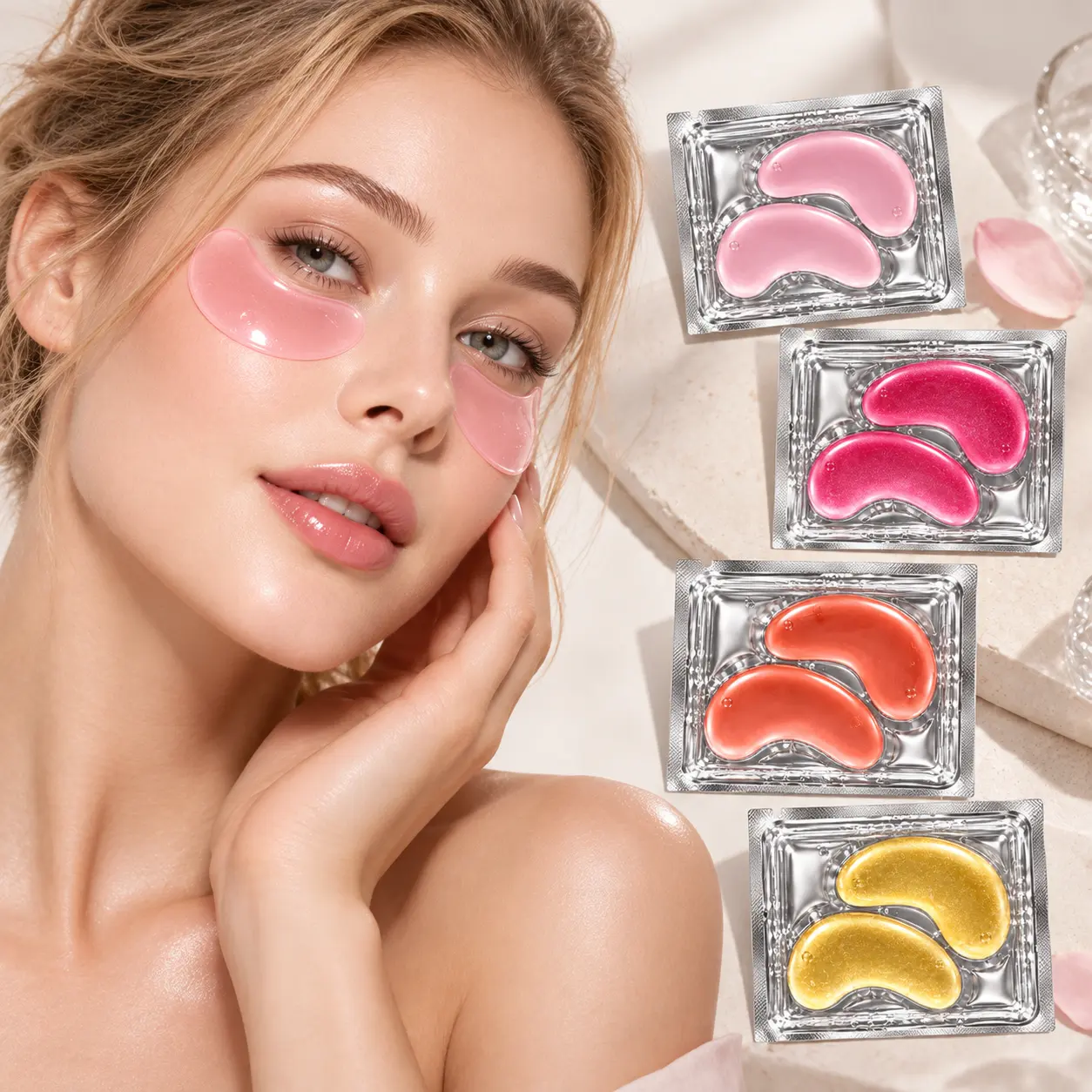
Our 24K gold patch and the PDRN variant run through exactly this programme; the eye mask category shows the shapes and colours available on shared trays.
For the full-face equivalent, read sheet mask versus hydrogel versus jelly, and for the testing workflow, from bulk to shipment.
Shape and active set are separate decisions, and the inquiry form asks for both.
Reference: ISO 11930:2019; ISO 17516:2014; internal gel and seal test methods

