Key takeaways
- A hydrogel is a crosslinked water matrix; a sheet mask is a fibre substrate soaked in serum
- Hydrogel holds its own water, a sheet mask holds serum in the fibre
- Hydrogel costs more per unit and supports longer wear claims
- Sheet masks are cheaper, lighter to ship and faster to fill
- The material decides the claim, the shelf life and the sachet
Hydrogel and sheet masks are often presented as two styles of the same product. They are two different materials with different manufacturing routes, different costs and different claims. Choosing between them is a specification decision that should be made before the artwork, not after.
1. What each material is
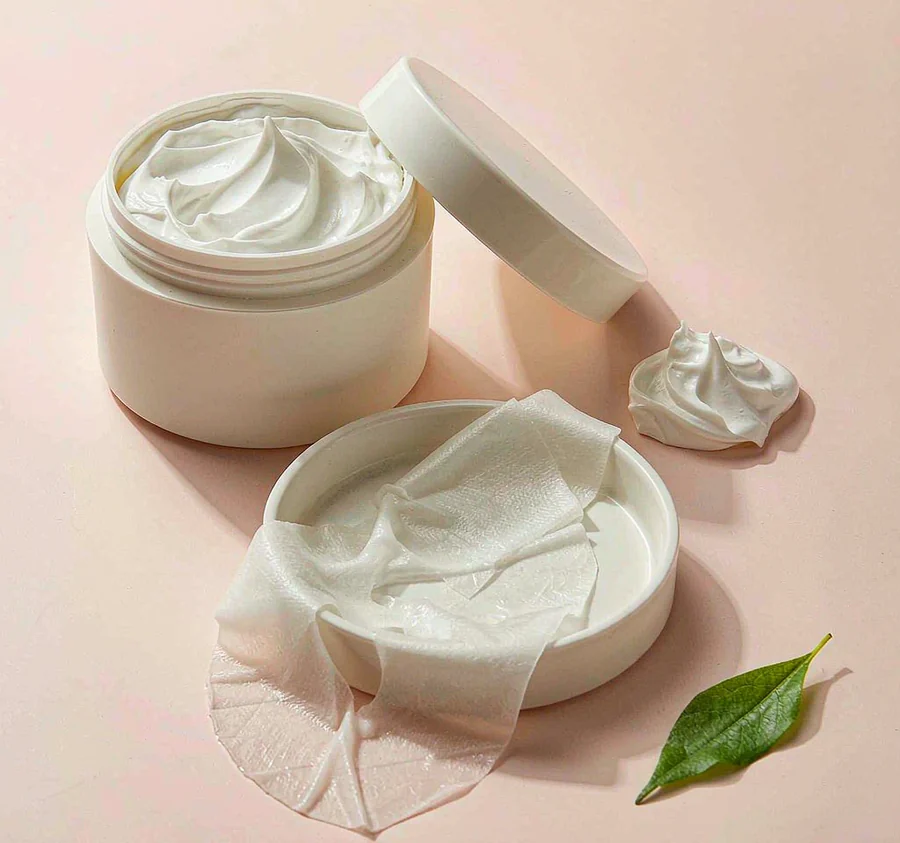
A hydrogel is a crosslinked polymer matrix that holds water in its own structure. It is cast, cured and cut. A sheet mask is a nonwoven or bio-cellulose fibre substrate that is soaked in a separate serum. One is a gel that carries water, the other is a fabric that carries liquid.
2. How the product behaves on the face
A hydrogel sits still and cools, and it does not drip because the water is bound in the matrix. A sheet mask delivers a larger volume of serum in the first minutes and then starts to dry at the edges. Hydrogel suits a long, still wear. Sheet masks suit a short, wet application.
3. Cost structure
Hydrogel carries the cost of the matrix, the mould, the cure time and the film. Sheet masks carry the cost of the substrate and the serum. At the same retail price, a hydrogel usually contains less serum and a higher material cost, which is why hydrogel is often positioned as the premium format.
4. Fill and weight
A hydrogel has a fill weight in grams per pair or per piece. A sheet mask has a serum load in grams per sheet, and the substrate has its own weight in grams per square metre. Comparing the two on weight alone is meaningless, because the water in a hydrogel is structural and the serum in a sheet mask is free.
5. Shelf life and barrier
Both need a barrier sachet, but for different reasons. A hydrogel loses water and needs a film that stops it. A sheet mask can dry out and can also oxidise, so the sachet has to control both moisture and oxygen. A single-layer sachet is adequate for short shelf life and rarely adequate for two years.
6. Claims each one supports
Cooling, soothing and long wear are natural hydrogel claims. Fast hydration and serum volume are natural sheet mask claims. Claims about occlusion belong to hydrogel, because the matrix forms a physical layer. Claims about a specific serum concentration belong to the sheet mask, because the serum is a separate, measurable formula.
7. Line and minimum order
Hydrogel needs moulds, and moulds carry a setup cost that shows up in the minimum order. Sheet masks need a converting line and a filling line, and the minimum is driven by the substrate roll and the serum batch. For a small first run, the sheet mask is usually the lower-risk entry.
8. Temperature and transport
A hydrogel is heavier and contains more water, so freight per unit is higher and a freeze in transit can destroy the matrix. A sheet mask is lighter and more tolerant, though the serum can separate in heat. Both need a stability study that includes a transport simulation, not only a shelf standing test.
9. How to choose
Start from the claim and the price point. If the product sells on cooling and stillness, hydrogel. If it sells on serum and value, sheet mask. If it sells on both, the answer is usually two products rather than one compromise.
10. Where it fits
The hydrogel side runs through the eye patch range and the collagen face mask range; the sheet side runs through the sheet mask range. Fill weight is covered in the news section.
Reference: Material specifications and line trials, 2025