Key takeaways
- One drop is 0.03–0.05 ml depending on the bulb and the viscosity.
- A long tube in a short bottle draws air and doses erratically.
- Rubber bulbs degrade with essential oils and high-alcohol formulas.
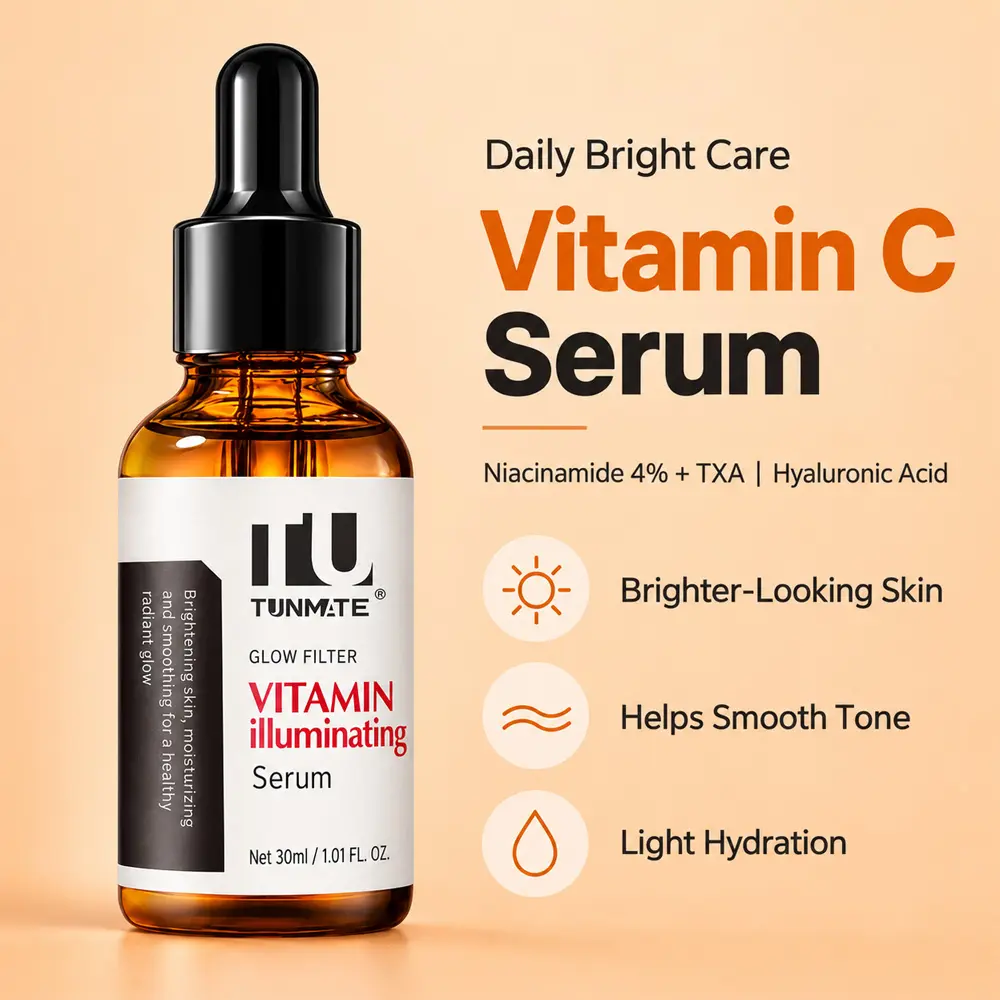
A dropper is a glass pipette with an elastomer bulb, and it is the visual signature of the serum category. It also doses inconsistently: the volume per drop depends on the bulb, the tube length, the formula viscosity and how hard the user squeezes, and none of those are controlled.
1. Drop volume
A typical drop is 0.03 to 0.05 ml, so a 30 ml bottle yields 600 to 1,000 drops. A thicker formula gives larger drops; a watery one gives smaller. A brand that says “three drops” is specifying between 0.1 and 0.15 ml, which is well below a typical face dose.
2. Tube length
The tube must reach the bottom of the bottle, or the last third of the product cannot be drawn. A standard 30 ml bottle needs a 60 to 70 mm tube. A short tube leaves product stranded, which is a complaint about “the bottle running out too fast”.
3. The bulb
Natural rubber is soft and gives good suction; silicone is more chemically resistant and stiffer. Natural rubber degrades with essential oils and with high alcohol content, and it can discolour. For a solvent-heavy formula, silicone is the safer choice.
4. The collar
The collar holds the pipette in the bottle and seals it. A collar with a poor seal leaks when the bottle is tipped, which shows up as a stained label. The collar is usually PP, and its fit on the glass neck is a tolerance question.
5. Glass quality
Type III soda-lime glass is standard and adequate for most cosmetic formulas. A strongly acidic serum can extract alkali from soda-lime glass over time, and type I borosilicate is the safer choice. The cost difference is small relative to the risk.
6. Dose consistency
Measure the drop weight on a balance for ten drops from five bottles. A spread above 15 percent means the user cannot dose reproducibly, and the product’s actual use will differ from the label instructions. A measured dose is a technical claim, not a marketing one.
7. Airless alternatives
An airless pump doses exactly and protects the formula better. It is less photogenic and reads as clinical. Many premium serums have moved to airless for exactly this reason, and the dropper has become a styling choice rather than an engineering one.
8. Child resistance
Some markets require child-resistant closures for products with a high concentration of certain actives. A dropper bulb is not child-resistant. If the formula contains a regulated active at a high dose, the pack requirement may exclude a dropper entirely.
9. Recycling
A dropper unit mixes glass, plastic and rubber and is not recyclable as a unit. The glass bottle can be recycled if the collar and pipette are removed. A brand claiming recyclability should explain the separation step.
10. Cost
A stock glass bottle with a stock dropper costs a few dollars; a custom moulded bottle with a custom collar costs many times more. For a first run, stock components with a printed label are the cheapest route to a credible serum presentation.
11. Where it fits
Dropper formats run across the vitamin C serum range; the dose comparison continues in the airless entry.
Reference: Dropper supplier data and dose measurement records, 2025

