1. What the fee actually covers
Producer responsibility schemes charge brand owners for the collection and treatment of the packaging they put on the market. The charge is calculated per material and per weight, declared once or twice a year. In most markets it is a few cents per unit, but it scales with the whole pack, including the shrink film on the tray and the leaflet inside the carton.
2. Weight is the base unit
A 50 ml cream jar in glass with an aluminium lid, a plastic inner seal and a printed carton carries four declared components. Each is charged at its own rate. Reducing the carton board from 350 to 300 gsm changes the fee and the freight cost at the same time, which is why lightweighting projects tend to pay back faster than expected in markets with EPR obligations.
3. Eco-modulation changes the ranking
Many schemes apply a bonus or a penalty based on recyclability, recycled content or the presence of problematic materials. A mono-material pack can be charged less than a lighter multi-material pack. This inverts the usual assumption that lighter is always cheaper, so the fee table has to be read material by material rather than as one blended rate.
4. The inventory you need first
You cannot model the fee without a component list: each part, its material, its weight and whether it is separable. Most factories can supply weights from the packaging specification; separability is the part that needs a decision. A pump with a metal spring inside a plastic housing is a different declaration from the same pump with a plastic spring.
5. Lightweighting maths
Dropping a jar from 60 g to 48 g saves 12 g of glass per unit. Across 100,000 units that is 1.2 tonnes, which matters for both the fee and the freight. The saving per unit looks trivial in isolation and material in aggregate, so present the case at annual volume rather than per piece, and check that the lighter jar still passes drop and stack tests.
6. Mono-material and the step change
Removing a component often saves more than reducing it. A jar with no inner seal, or a sachet with a paper window removed, drops a whole declared line. Where the product allows it, that is usually the largest single reduction available, and it also simplifies the artwork and the filling line.
7. Paper is not automatically cheaper
Board and paper carry their own rates, and a coated carton with a plastic window may be declared as mixed material at a higher rate than a plain board carton. Assuming paper is the low-fee option without checking the local table is a common and avoidable error. The same applies to compostable plastics, which some schemes treat as non-recyclable.
8. Where it lands in the unit price
For a typical skincare pack, the fee is a fraction of a cent to a few cents per unit, depending on market and material mix. It does not change competitiveness by itself, but it does change the ranking between two packaging options that were previously within rounding of each other. Build it into the packaging comparison sheet, not into the general overhead.
9. Data quality and audits
Declarations are increasingly checked against packaging specifications and purchase records. Keeping a component weight sheet per SKU, updated when the pack changes, is the cheapest way to survive that check. Estimates that were acceptable in the first year of a scheme are usually not accepted in the third.
10. Where it fits
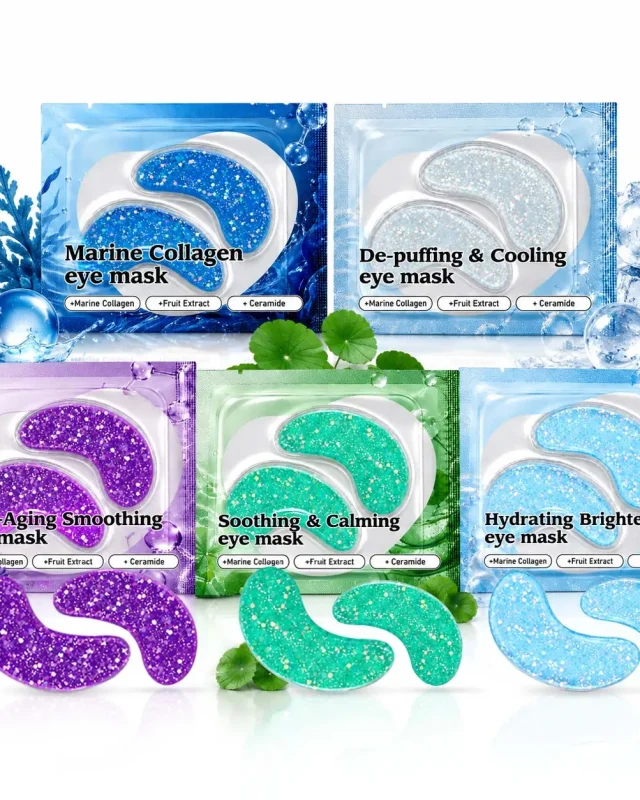
Packaging choices affect fee exposure, freight and shelf performance at once. Our eye patch and cream ranges show the component counts involved, and encyclopedia covers material comparisons.